Scott Treleaven finally shows in Toronto

cc_scott_treleaven_2017_placeholder
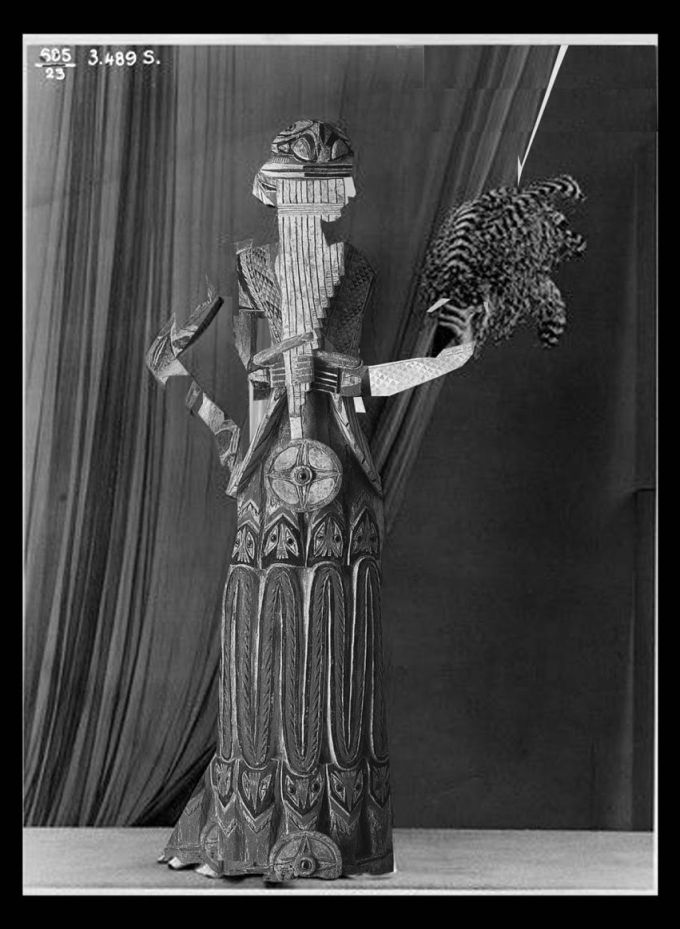
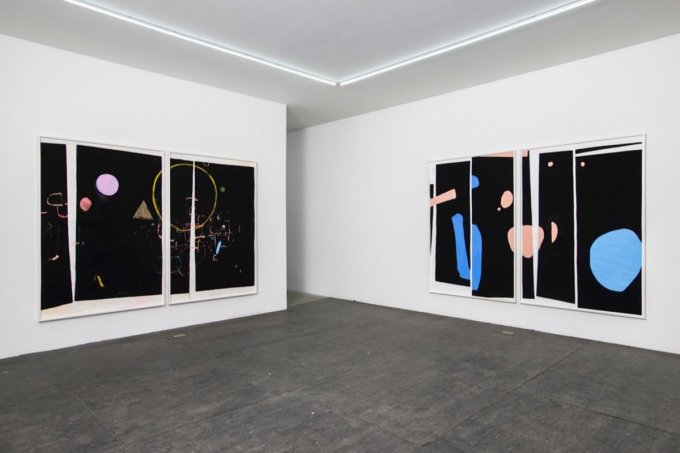
Scott Treleaven says he’s pursuing his interest in mystic abstraction in new works on paper at Cooper Cole.

You’d think a homegrown artist who’s hung out with Malcolm McLaren, Derek Jarman and Genesis P-Orridge and shown all over the world – including Paris and New York City – would’ve had a solo show in Toronto by now.

But Scott Treleaven is launching his first solo exhibition here this week.

He’s finally embracing what he calls “the increasingly rare human ecologies” of his readopted home.

“Toronto has totally unique integrations of different cultural, intellectual and creative communities. Anyone who’s lived here for a while knows how lucky we are,” he notes inside his studio.

Treleaven built his career aligning the subversive potential of mysticism and the occult with queer politics and art. The abstract artworks on paper in this exhibition are something of a departure for him, but he sees these luscious, deeply pigmented works as a natural extension of his interests, placing him in a tradition of mystic abstraction from Wassily Kandinsky to the rediscovered Hilma af Klint.

Treleaven’s bio is crammed with fascinating personal and professional encounters. There’s the meeting with McLaren in Paris, for example, or a big-name production company’s desire to make a mainstream feature based on his “queer pagan punk” zine/film The Salivation Army. That project foundered on the utter daftness of the film company’s vision, which sought to replace his gay teen protagonists with straight leads.

After taking a break from film studies at York, he moved to London in 1991, where he had a chance encounter with Jarman.

Treleaven’s filmography is very rich: Queercore: A Punk-u-mentary; Gold, a collaboration with British provocateur Genesis P-Orridge. But it was Jarman who urged him to focus more on visual art, a bold move that’s resulted in a very successful career.

After eight years living in Paris and New York with his partner, the painter Paul P., Treleaven is back in Toronto for what he believes will be an extended stay.

As to why he’s finally getting a solo exhibition here now, he thinks the city’s art scene has expanded its horizons in recent years, sparking a “vital, real-time dialogue that’s bringing artists-in-exile back into the fold.”

It’s a shift that reflects Canada’s changing, more engaged position in the world.


SHOWS WE’D LOVE TO SEE 
Some Toronto artists – former and current – have bigger audiences for their work elsewhere


Lorna Mills Mills works with the net and new media. The Whitney Museum recently purchased her multi-artist compendium Ways Of Something.

Karen Lofgren The OCAD-trained sculptor now works out of L.A.

Willy Le Maitre The Toronto-based intermedia artist exhibits with the Canada gallery in New York City.

Gareth Long Recently relocated to Toronto from London, the installation artist shows internationally.

Rosemary Heather


SCOTT TRELEAVEN at Cooper Cole (1134 Dupont), January 20 to February 18, 2017.

This text originally commissioned by NOW Magazine, JANUARY 18, 2017.
Nasty

This essay was written to accompany the exhibition of the same name. Details below.

Donald Trump deriding his electoral opponent as a “nasty woman” is hardly the biggest problem associated with the new American president. The insult delivered during the third presidential debate does, however, have relevance to the bizarre state of affairs that is the United States in 2017. The country is currently in the grip of a self-inflicted catastrophe. Chaos is not too strong a word for what is unfolding; who knows where its all heading? But just think what the cause is — the threat of a woman holding the country’s highest office. Reality TV host and fraud businessman Donald Trump was thought a better alternative than that.

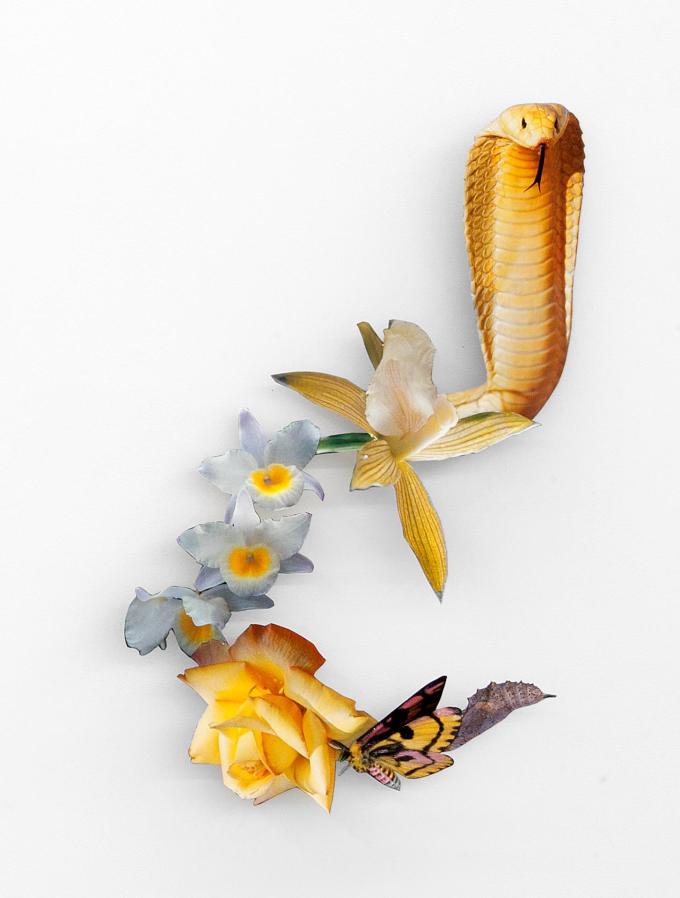
jmurphy_cobra

Jennifer Murphy, from collage series, 2016

Nasty personifies the idea of an embodied threat. On the occasion of Trump’s inauguration, the word takes on an added significance: as an emblem of resistance. Taking this challenge on, Nasty the exhibition is organized to coincide with the inauguration and the worldwide protests that are accompanying it. The idea of nasty connects with art in the latter’s embodied seductions — art is always in some sectors considered dangerous, in a tangible but hard-to-define way. We know from Plato that art is thought a program for deception; like misogyny, the social prejudice against it runs eons deep.  If artworks and women still engender a suspect reputation, what is the problem exactly?

nasty_shannon_2

Image: Shannon Bool (photogram) 2016

Going back to Hilary, the New York Times ran an illuminating opinion piece last November 5th, three days before the election. Titled, “The Men Feminists Left Behind,” the author Jill Filipovic talks about an America (and by extension all of the West) in which men have enjoyed a default dominance, forever. “It was mostly white men in charge and it was white male experiences against which all others found themselves contrasted and defined.” The clearest indication that this status quo might be undergoing change is — what else? — the resistance to it expressed by Donald Trump’s electoral success. Filipovic outlines the many advances women have made in the past decades — “For women, feminism is both remarkably successful and a work in progress” — and notes that “men haven’t gained nearly as much flexibility.” Accurately derided in Vanity Fair as “shallow and mediocre,” Trump as US President is living proof that men still rule, regardless of how ill-suited they may be for the job.

nasty_nadia_4

Nadia Belerique, from shelf series, 2016

Is the argument of this show then that artworks are like women? Clearly, yes. More specifically it proposes that both derive their power from a position of vulnerability. This position, however, produces in its turn an entire world of invention. Writing about Clinton’s loss to Trump in the election, the philosopher Rebecca Solnit notes: “power… is a male prerogative, which is to say that the set-up was not intended to include women.” If power is not “set up” for women to share in, they have to figure out other ways to get it. Faced with this reality, the appurtenances, so called, of the feminine are a way of owning it — if not power necessarily, then an equivalent force all its own.

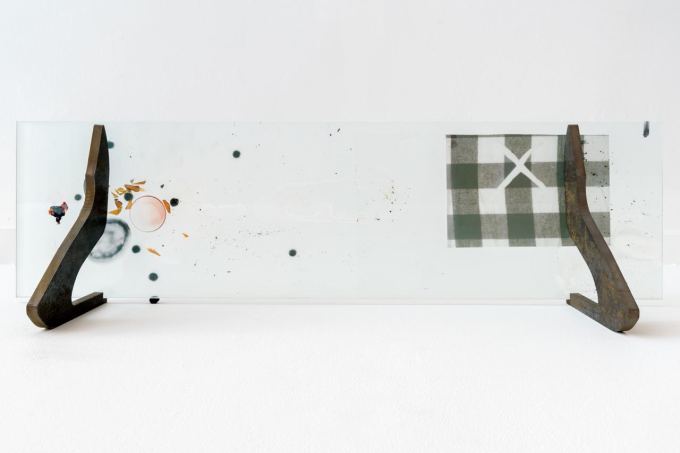
An heightened relevance for feminist politics provides the context for this exhibition, but its not a political show. Nasty presents work by eight women artists, each one in some way investigating the visual culture of femininity. The types of practices on view are wide-ranging. Through surface collisions of ornamentation and draping, Shannon Bool evokes the figure of the feminine, as both historically specific and timeless. Stiletto heels, rendered as both support and staging ground, form the basis for Elizabeth Zvonar’s evocative collages. The power dynamics of looking take on new — gendered — meaning in Nadia Belerique’s shelf sculptures. Jennifer Murphy’s delicate sculptural collage works hint at the poisoned barbs that lie beneath the natural world’s seductions. Against an astringent blue background, the title Shady Lady (2010), suggests the gendered nature of Kristine Moran’s gestural abstractions. Aleesa Cohene’s 2009 video installation Like, Like discovers ulterior narratives for mass culture’s female icons. With Valerie Blass’s 2009 work Touche de bois, wood and jeggings are combined to be somehow confrontational. And finally, and hardly least, Kara Hamilton contributes further embodied aggressions with the beast-like, Tonka, a work she made in 2015.

Rosemary Heather

Nasty
Nadia Belerique, Valérie Blass, Shannon Bool, Aleesa Cohene, Kara Hamilton, Kristine Moran, Jennifer Murphy and Elizabeth Zvonar
January 21 – March 4, 2017
Daniel Faria Gallery
188 St Helens Avenue
Toronto ON, M6H 4A1
Canada
www.danielfariagallery.com

See also, Nasty Talk: Feminist Art In The Age Of Trump, a reprint of this text with a nice selection of images from the show, at Good Trouble Magazine.

Willy Le Maitre – title flight tiger compound returns

canada-nil-database-7_hfytahr

Canada, New York
May 6 – June 5, 2016

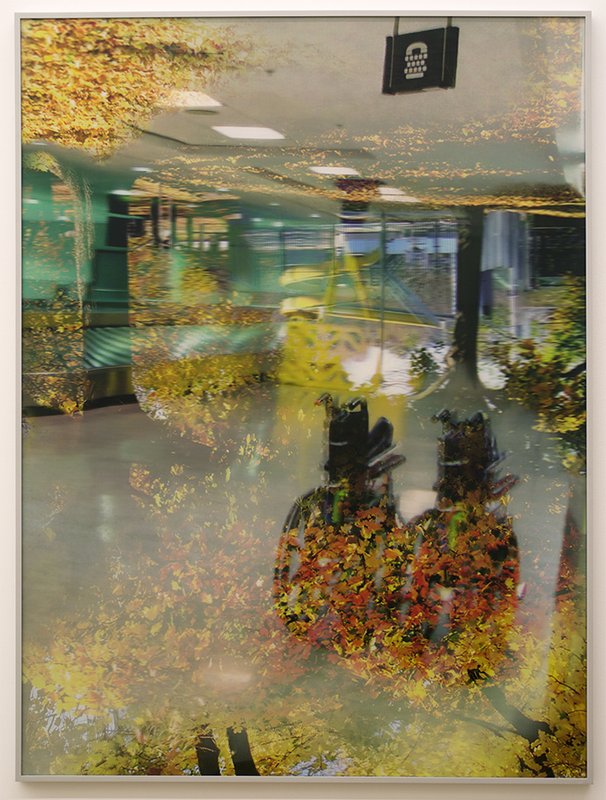
New arrangements in the drama of looking might be the mission statement for Willy Le Maitre’s lenticular photographs. The work is an update, in other words, on a well-established tradition in art — to upend accustomed habits of viewing, purely through formal means. Writing about the work, the critic Blake Gopnick talks about this tradition as one of visual “indeterminacy…one of the crucial bywords of modern art at least since the time of Cézanne and Picasso.”

Artworks considered indeterminate make special demands on the viewer. It’s a program for art, one for which Robert Hughes coined the phrase, the Shock of the New. The title of a 1980 TV series he wrote and hosted for the BBC, Hughes described a dynamic for artmaking that was essentially avant garde. Pushing forward, out ahead of the general public, modern artists work to broaden the intelligibility of contemporary experience, and this happens primarily in a visual key. As narrated by Hughes, each moment of innovation has historically specific circumstances — the Shock of the New is a migrating phenomenon. For instance, the visual disjunctions of Cubism are now familiar to the point of seeming decorative. In Le Maitre’s work, he uses lenticular images to revive this dynamic of dislocated (or fresh) looking in art. If the results are truly shocking, the question is what historical conditions could the work be said to express?

Used typically to make crude picture animations, lenticular technology dates from the post WW II period. Two or more images are animated when overlaid by a screen of finely ribbed plastic. Vision gets refracted one way or the other according to the angle of the ribs (and the angle of vision), each rib a lens that magnifies the strip of image that lies underneath it. Early uses of this novelty technique included badges for Dwight Eisenhower’s 1952 Presidential campaign (“I like Ike” alternating with a head shot of the candidate), or so-called Flicker Rings with pictures of Batman, or Curly from the Three Stooges, on them.

A less familiar term for this process is “Autostereo”. The name points to the technique’s origins in early experiments in optical illusion. The “auto” stereo innovation was a kind of improvement on the late 19th century technique of stereoscopy. When viewed with the aid of the eyeglass-like stereoscopic viewer, slightly different images seen side-by-side take on the illusion of 3D depth. Both vision technologies are approximations of the physiological process, designed to demonstrate a specific aspect of how vision works — that is, at the intersection of interior and exterior sight. The tangible artifice produced by a stereoscopic or lenticular image is in the end a slight entertainment, but one that helps highlight the role the mind plays in visual perception.

Internal vision has long been a preoccupation of Le Maitre’s. The artist posits stereoscopic effects as a model for what is seen by the mind’s eye. In the imperfection of the 3D illusion, Le Maitre finds an expanded realm for exploration, primarily by making films that combine digital and 3D technology. This extensive body of work characteristically uses digital effects to extend and distort 3D treatments of real world imagery. A phantasmagoric experience results, one that recognizably partakes of both artifice and the chimera of dreams. Freedom from the constraints of the material world is of course a capacity of the mind, and art often provides the best methods for making this capacity tangible.

auger_e4kehof_gfzfjcr

Film is typically described as a dream-like medium. Its invitation to sit in the dark and be off-duty somehow lends a legitimacy to even the most outlandish of speculative journeys it can fabricate — as a pastime, and as a form of experience. Always tasked with the job of convincing viewers of their plausibility, the same benefit of a doubt is less frequently extended to artworks. Arguably, this means Le Maitre’s lenticular works are a more risky proposition for the artist.

In his hands, lenticular technology becomes a tool of indeterminacy, with corresponding effects on the viewer. By combining photographs into a single picture frame, Le Maitre condenses the space-time continuum that each image implies. The collages he makes are deliberately disjunctive, their smashed perspectives rendered dynamic because of the way lenticular lens orchestrates viewer engagement.

What results is a destabilized position for the viewer. As Phil Grauer, of the New York gallery, Canada, observes: “You can’t conquer these works.” The space they construct is ambiguous without hope of resolution. Making vertiginous space inside the picture plane could be said to disrupt viewer expectations of coherence. From another perspective, what Le Maitre is doing is creating a more complex visual field for viewer apprehension. Beyond the capacity of the lenticular to create such an effect, what field of reference is the artist implying here? The quick answer would be “Pokemon Go”, the augmented reality that is now an expected component of everyday life. In a broader sense, it’s not hard to find other artworks that also traffic in a figure-ground confusion. What this suggests is that contemporary life conjures up not only a collapsed picture plane, but also one that is infinitely expanded. Le Maitre’s insight is to combine the two, his use of the constraint of the picture frame alerting us to the truth of this new reality.

Rosemary Heather

This text commissioned by Border Crossings Magazine Volume 35, Number 4, Issue No. 140

More information about Willy Le Maitre is available here.