Kerry Tribe, There Will Be _______, 2012, Installation view, Courtesy the Power Plant / photo Toni Hafkenscheid
Toronto-based writer Rosemary Heather spoke to Los Angeles-based artist Kerry Tribe during her solo exhibition Speak, Memory at The Power Plant (24 March – 3 June 2012).
This excerpt is part of a longer conversation, most of which took place in a taxi on the way to the Toronto airport. Heather notes, “Setting out to do this interview, I devised a theory of how to understand Tribe’s work. As often happens, however, our conversation overtook any hope I had of getting Tribe to commit to a particular hypothesis about her art practice – it defies easy encapsulation. This made talking to Tribe about her work much like the experience of engaging with it: the process is an end in itself.”
ROSEMARY HEATHER: One way that I thought of talking about your work is through the lens of Here & Elsewhere (2002). You remade a piece by Jean-Luc Godard, in which he interviews children by asking them metaphysical questions. Can I locate that as a framework for your work as a whole?
KERRY TRIBE: The idea of remaking something?
RH: Yes.
KT: I don’t know if I would think of it as remaking so much as returning. At UCLA when I was a graduate student I organized a series of screenings — a 24-hour unofficial film festival — because I discovered a little pocket of money in the graduate program that allowed me to rent some titles.
I had never seen Godard’s television series France/Tour/Détour/Deux/Enfants (1977) and a friend recommended it, so I screened it. I just screened the first two episodes. I was really struck by what happened when this big father of avant-garde film and video (who was a Maoist and tough and rigorous and making images that were often difficult to look at) set out to interrogate this little girl and little boy about heavy political and philosophical issues. The little girl’s responses, which were down-to-earth and sometimes confused, were totally compelling to me. What was it about the presence of this little girl? There’s one point in the video where her face appears — her name is Camille Virolleaud — and over it is the word “Verité” in big letters. And I thought: There’s something accurate about that. We all want to identify with this simple, you might say, Cartesian subject position that says: Yes I know. I’m here. I only exist once. I walk through my life. I understand things or I don’t, even if we know better. I mean, even if feminism, psychoanalysis and critiques of capitalism tell us that this simple belief in one’s own self-identity, agency and autonomy is inadequate, it’s nevertheless compelling. I wasn’t so much interested in specifically remaking that Godard video, or in pointing directly back to it but rather in trying to see what would happen if some of those questions were asked again. At one point, Godard asked Camille about her room. It’s very bright and it’s clean, and who cleans her room? (I’m paraphrasing.) And she says something like either her mother or the housekeeper does it. And he asks, Well who pays your mother to do this? And she thinks probably nobody does. Do you think maybe The State should pay her? And, Is The State a man? Or a woman? And so on. It’s great stuff.
And these are questions that continue to be urgent. And yet in the end, it didn’t seem viable to do that in 2002. When I tried to work the explicitly political questions into the script it just fell flat. It was actually dreadful.
RH: Can you elaborate? What does your piece look like? Read the full interview here.
This interview was commissioned by the Power Plant, Toronto. A longer version will be forthcoming.
RH: Why is the Real so popular as a genre, though?
KL: Why is the Real so popular?
RH: In art, on TV, in popular culture…
KL: I have a theory on that. Our culture that has moved towards a fetish of the everyday, a fetish of drawing attention to yourself as an individual. It’s a trend towards an ultra narcissism, and the emphasis on the individual comes at the exclusion of being able to formulate a critique on a societal level, because it’s only about the individual, and that’s a problem.
I highlight the above quote from my 2011 interview with Ken Lum, because it so accurately identifies a contributing factor of the insurgent politics of the West in 2017 (Trump; Brexit). As if to underline this point, Lum’s analysis of the “fetish of the individual” is also the essential argument Adam Curtis makes in Hypernormalization, his 2016 BBC documentary. The interview is now available for purchase as an ebook on Amazon for .99 cents (click on the link below). The publication also includes, To Say or Not to Say, an essay Lum wrote in 2008 that we discuss in the interview. Both interview and essay showcase the incredible trenchancy of Lum’s thought, and his ability to translate his thinking into artworks – as relevant today as ever.
The Lum publication is part of a larger project, which either repackages existing interviews I have done as ebooks, or releases new interviews – by myself and others – all under the imprint, Q&A. A short blog post I wrote about the thinking that informs the Q&A project can be read here: How to Make a Magazine in 2015. Its a statement of purpose that attempts to think through the changed conditions of publishing in the 21st century – ideas I hope to expand on in the coming months.
Shannon Bool, The Serpent Heart, Photogram (2006) 131 x 101 cm Version 2 of 3, 1 Artist´s Version
RH
You used to do work on paper and now what do you do?
SB I’m still doing work on paper but I’m doing a lot of different things, a lot of photograms, photo collages, painting and drawings still, installation pieces or room pieces – pieces that are specifically adapted to exhibition space.
RH And what’s the thing that ties it all together?
SB I guess the content that I’m working with is similar in different works that I make. But then I always come to a different sensibility in making it. So something might lend itself to becoming a photogram or something might become a silk painting. Or something might become an architectural sort of project but this comes usually within the process or even before the process when I’m thinking about what I want to make. I want to work with this picture I found in the flea market. Or I want to work with the The Golden Notebook. Or I want to work with Martha Graham. And these things are usually parts of bigger bodies of work…I usually have two or three kind of bodies of work that are close together in content and then I try to keep free with the technical aspects of making it. Because often I make things more than once and the way I make it has to be very specific for it to function. I guess it’s kind of about form and function too.
RH You know what you want, you know how to get it and then you just…
SB Yeah, you just kind of pick up things along the way. Because the way something is made or using different mediums I think is just a sensibility that comes with trying to be really clear about saying something in a unclear way that doesn’t relate directly to the content. So my process is really necessary to show itself as content. And this is something I think that merges together with the original starting point of the idea that I have.
RH Why do you want to say something clearly in an unclear way?
SB I mean to say something in a non-narrative way, not one-to-one with the original, the original content or form rather, because I often use a photo or make reference to something that already exists. And so I don’t want to just simply appropriate – it just doesn’t work for me to work with one-to-one appropriation.
RH This is something I noticed, for instance, in Six or Seven Wolves (2005-2006), that the wolves are depicted in an indistinct way.
Shannon Bool, Six or seven wolves (glossy version) Photogram (2006) 162 x 101 cm Version 3 of 3, 1 Artist´s Version
SB Yeah.
RH And then also there’s only five of them…
SB Yes. This is a good example. I can take you through the process this way. This was in the Case Studies…Freud’s case study, “the Wolfman” where the patient’s Obsessive-Compulsive Disorder was traced back to this dream that he had explained in one of his sessions. He had this dream when he was about three or four, he said. And he looked out his window and he saw the six or seven wolves and they looked like white huskies. They looked like they were white wolves with (sheepdog) tails, they had really bushy tails and they were all staring at him. And it was completely unheimlich, uncanny. And he did a drawing in one of his sessions with Freud and he only drew…there’s five wolves I think in the photographs. He only drew five wolves in his drawing but he said there were six or seven wolves. So because of this Freud went through I think four pages of his own interpretation of why these two wolves could have been missing. He thought that the two wolves maybe stood for his mother because he had seen his mother having sex with his father’s wife in the doggy style position. And another example was, there was a fairy tale in Europe called the Wolf and the Seven Little Kids. It’s kind of like Little Red Riding Hood but with more characters. And I think there’s something about all of the kids getting eaten except for one who hides in the clock case-Freud also connects this fairy tale because the wolf has the baker whiten his paws to trick the baby goats.
RH Four pages of Freud’s analysis specifically about the fact that those two wolves were missing.
SB So what I wanted to do was to try and make my photogram as similar compositionally as I could to this drawing from Pankejeff, I think his name was, the patient. So I went through like literally hundreds of images of walnut trees without leaves to try and find one that worked like the one in the book, in the drawing that I had seen. And one of the reasons that the wolves were kind of similar is because I drew them myself. And when I was younger I drew, I think this is one of those Canada things, like I drew animals, wolves, wild animals quite a lot. So it’s just natural to draw wild animals…I researched Arctic wolves; I found them in the right positions and added these sheepdog tails. And then in the whole lighting process with the photogram you don’t really have that much control over what it’s going to look like because I’m using cheap computer prints on A3 transparent paper in this work in particular. And so how the wolves and the tree come together in the end is kind of out of my control to see how the borders will look or what will happen. I guess what I am what I’m trying to do is to clearly determine a certain kind of psychological space. Or a certain kind of attitude that comes from my re-assessment of a lot of different material values and a lot of different stores of meaning that comes from working through what I see.
RH This is quite clear, that you create this psychological space and the image of wolves looking at you seems very powerful. And it also has this real world reference to this actual psychoanalytic case study, a famous case study. This creates a division between the way the wolves are depicted and the idea of what’s depicted, and what’s beyond the surface of the work. This connects to what you were saying before about how the work embodies a relationship to the content.
SB Yes.
RH You said in a previous conversation that your goal was to create ornament as content?
SB Yes, something that John Dewey said is that ornament is usually dissociated from its sourced content. So if you have for example a Heriz carpet. I have a Heriz carpet at home.
RH What is that?
SB It’s a region in Persia. I stare at it all the time. The emblems and the ornaments in the Heriz carpet have been divorced for their original tribal and political associations. So two hundred years ago, three hundred years ago, the ornaments in these carpets served as a kind of admission to cultural meaning for the people who lived in this town who made these carpets. And then these carpets became very valued in the West. They became really popular because they’re quite tough and they’re also very harmonious, very geometric. And so they started to change the ornament based on the wishes of the Western consumer. So now a Heriz doesn’t have the same ornamental values, the meaning of the ornament is not there like it was before. It’s made for Western people now (and) the ornament isn’t associated with the meaning of the town itself. And this is something that I find interesting because when you’re using ornament today you can’t really take the face value of what it means.
…
SB In my Six or Seven Wolves drawings series, I was using ornament as an atmospheric quality. Its less of decorative thing. But then as I came further along I realized how ornament can kind of, can function as a base in its own right. You can take these…the original context it gets suspended and it becomes something else. It indicates something different than you would originally expect, something that’s not decorative. The purpose becomes depth in itself. Normally when you see ornament, you think of it as something that covers the surface, and it makes things pleasing to a viewer because you have a scientific relationship to geometric configurations that makes you feel good when you look at them. That’s why ornament can be very dangerous because it’s a cheap draw-in for the viewer. You don’t want to kill with kindness.
RH What do you mean dangerous?
SB If you work with ornament and it’s not specific it can just be something that, it can just be a pleasing element. It can be a darling, you know it can be something that you…
RH Which is not what you’re trying to do.
SB No. But I see it in contrast to using something that draws the viewer in. I think the draw, the ornament…I see it as its own entity. These days for example if you want to try and use Cartesian perspective to show deep space it’s really like a sleeping pill because you can’t compete with Hollywood. You can’t compete with all of these special effects things that have really simplified and flattened deep space. And so what I would like to do or what I try to do in some of my work, or a lot of my work, is to look deeply at a surface and to see what the surface resolves in a deeper way.
RH This segue ways nicely to the floor work Schraegraum (2005) This is a Photoshop work that actually translates Photoshop perspective into real thing on the floor?
SB Yeah it was more about the idea of living with a material on a regular basis. So we have a lot of surfaces that we take for granted.
RH Yes.
SB Or surfaces that are just in our space. So something like a laminate, it’s kind of a paradox that we accept it as a real spatial existence.
RH Right.
SB And also I think a lot of artistic developments take an angle on, on certain materials or certain kind of technology when it hasn’t really been pushed to its limit. We don’t really know how we can translate an idea like laminate into a different space. And it’s also dealing with more of like a suburban sensibility as opposed pop culture. Some kind of breakdown of values that are just generally taken for granted in a visual space.
RH I don’t think it’s a very common concern at the moment of dealing with conceptual issues in two-dimensional representation? It seems to me what you’re doing is kind of unique.
SB Yeah it’s not; it’s not a common practise definitely.
RH No, it’s not like the big collective project to develop cubism.
SB Yeah that’s true.
RH Maybe you can give some more examples of the idea of surface and space. What about Origin/Inversion (2005) It’s a wall drawing and it’s drawings of carpets?
SB Yeah, it’s both. One of the carpets is from a painting by Jan van Eyck and the other one is from a painting from Hans Memling. They’re both from paintings from the fifteenth century. Perspective started to get configured back into painting at this time. But these are paintings from the Northern Renaissance. And instead of this Cartesian Italian approach where it’s almost like a stage set because the perspective is so perfectly crafted, (where a narrative is really balanced into the composition), what you have with the artists who were working in the North, like Jan van Eyck especially and Hans Memling is a very meticulous rendering of surface. So the end effect is more a kind of atmospheric sense of content, the content is less about the narrative that’s happening and more about the resonance of the different materials that are depicted. And this is also the origin that I have of the work, Schrägraum (2005), the laminate (floor). Schrägraum is a term from Panofsky. He’s talking about how the perspective of the Northern Renaissance painters is often crooked. Because they didn’t have the linear perspective perfectly executed. What comes out of that is a different reading of the space. He wrote about its’ psychological quality, which I find interesting, too). So this (my point of origin in) working with these kinds of surface materials to see how they resonate into a new reading of space.
RH Well I mean, why put the drawing of the carpet on the wall?
SB I wanted to make it architectural, (and bodily)
RH It’s in the corner.
SB I designed it on the computer to go in the corner. In the original paintings, the carpets were on the ground and then the perspective goes up the floor with the carpet. Each carpet serves as the starting point of the painting‘s perspective. And what I did was I put them together, because they both have a slightly different perspective, and inverted them on the wall.
RH Then there’s the pedestal.
SB This is a piece of laminate that I also wanted to ground it with another aspect of fake material that would add to this atmospheric quality. So I, I built (the) sculpture to rest on the floor to give it more resonance.
RH It’s like an apron.
SB Oh yeah.
RH And then there’s this coffee stain here. What is it?
SB That’s a wheel.
RH Oh, okay.
SB This is the Wheel of St. Catherine.
RH Uh, huh.
SB Because this is from the Mystical Marriage of St. Catherine by Memling, And it’s St. Catherine’s wheel. These carpets are all from the Ottoman time. These paintings also show the emergence of capitalism at this time. The fact that people started to trade with the Orient. And this is one of the first examples of…
RH Merchant capitalism.
SB It’s a good example of ornamental qualities being taken out of their context and used in another artistic platform.
RH The ornament from the carpet being used in the painting.
SB Yeah, then it becomes about the wealth of the church and doesn’t have the tribal connotations anymore.
RH I was interested to hear you speak about your process being dissociative. So maybe you could talk more about that?
SB Well, the idea of dissociation in its basic terms is the idea of splitting off. So it’s the idea of you losing contact with the present world and going somewhere else but in a non-hallucinatory way. It’s more about splitting from yourself. I connect this to drawing and the process of making work. What I find interesting is to use a sometimes very dissociative process of making work, which has to do with the repetition of making. The idea of making ornament is also very dissociative. If you look at Outsider Art – or art from The Prinzhorn Collection, for example – a lot of it is extremely dissociative.
RH What’s The Prinzhorn Collection??
SB It’s in Heidelberg. He was a psychiatrist who started collecting his patient’s work and naming it “art” in its own right. I think it was in the 1920’s. (I am off in the original, it was from 1919-1922 that he really started collecting) There’s a permanent exhibition in Heidelberg, you can go and see it. And then Dubuffet and Art Brut took up these ideas. With this kind of art you don’t have the division between the self and the paper. The ego of the person goes directly onto the work itself. There’s also some sort of psychic connection to what you’re making. But when I think of dissociation it’s this idea of, especially when I’m using something like ornament, I’ll start with a very analytical perspective of something that I want to make; or something that I want to say. Then in the process of making it something else comes up and often this has to do more with continuing the process itself than staying with the narrative content. And it starts to layer itself and its something that you can’t really edit that carefully. You can’t start from the beginning and say oh, the work is going to be like that or I think the work should look like that because it never works out that way.
RH So you use narrative references, like ornament, to create content about the process of making art.
I think that relates to the fact that you it does create a psychological space in your work, like in Six or Seven Wolves, for instance. So, maybe we can talk a little bit more about that?
SB Yeah.
RH It’s kind of a fraught psychological space.
SB I guess you just never want to make it easy for the viewer.
Shannon Bool, Ostkreuz (2006) Oil on silk, 163 x 122 cm
RH Why not?
SB This is something that you can connect ornament to. The idea that it’s a comfort zone. It’s like icing or it can be like mashed potatoes in a work. And if you have too much of that it becomes less about creating the work in a smart way or understanding more complicated aspects of the work. It doesn’t go deep into anywhere, not even the surface. It just kind of satiates the viewer. And it has to do with being comfortable within your own process and comfortable within your studio process, and what you’re using, the materials you’re using. This mannerism that’s created, it’s dangerous. It’s the dangerous thing about ornament and it’s something that you have to avoid.
RH Have you read Adolf Loos’ Ornament and Crime?
SB Yeah, it’s great. But Loos was really hard on ornament. He compared ornament to Maori facial tattoos (I don’t want to quote Loos directly with “savages”), that they have ornament even on their face shows how lower they are the Darwinian scale. And he (wrote) about prisoners, that they tattoo and decorate their bodies and how this is another example of how low ornament is. I thought it was brutal when I first read it. But then the first time I went to Vienna I could see his point of view because everything is so ornate and decadent there. And then you go into this café that he designed, the Museum Café and it’s just like a breath of fresh air. And you see these Art Nouveau buildings everywhere and just coating after sugar coating of ornament. So I think that for ornament to function is has to be aware of this aspect of cancelling itself out. It has to know its limitations.
RH I read a book by Rebecca West, a book of essays. In one of them about the Nuremburg Trials, she said something about how she could see in German architecture the non-restrained detailing was indicative of the decay of that civilization.
SB But this is true in every art movement you have a point where the scales start to tip and the work becomes comfortable with itself and it becomes, it stops functioning because it knows what it’s doing too well. So that’s why I think ornament is dangerous because it has to be used in a new way. You have to look at it in a way that looks at its intrinsic value- not just its original intrinsic value, but the terms of how it functions in a space today.
RH Well bearing in mind this idea that it’s dangerous, this is one of the main tendencies in your work ornamentation, pattern, detail…And it occurs to me that this dissidence is built into it, there’s always a disruption in the pattern field…
SB This is this wall-paper work Liquid Pizzeria (2004) where I had an architect design this disruption in this pattern from cheap pizzeria wallpaper that you find in pizzerias in Germany. I wanted to use this idea of futurism, of depicting motion and space but using the wallpaper as the background for this motion. So I had an architect design this swirl for the wallpaper but then I hand collaged it because I wanted to, to me if I had just printed it out on the computer this work would have been too boring. So when you see it, it has these hand collaged little bits in it so it really slows down the reading of the work. Which is really mucked up.
RH But I mean this swirl, it’s a brick pattern, no?
SB Yeah.
RH And when you asked this architect to do it, what did you ask him to do?
SB I wanted to have some photo disruption in the space so she just showed me different designs and ideas and we sat through a session of looking at different things that could happen and then I decided on this one.
RH Can you talk about the floor?
SB Yeah, I just, this is an idea; this is another very dissociative idea. And I thought this work was really formal.
RH What’s it called?
SB It’s called, Partially Renovated Floor (2004) And it’s funny, because I thought this work was very, very clean and formal and then a conceptual artist that I met told me that it is more of a fetish work.
RH Oh, yeah that’s interesting.
SB Which is true.
RH Yeah, yeah.
SB And I think this work is highly dissociative because it came from being in one of the studios I worked in when I was at the Staedelschule in Frankfurt and staring at the floor for a year. It had originally been a studio from the Hermann Nitsche class so there was a lot of shit on that floor.
RH And, basically, you scraped it away?
SB I just renovated a part of it. But then you see the difference, and one of the reasons I did it was that the floors are very, very expensive hardwood floors, they picked the best kind of hard wood floor for the studios.
RH Is it parquet?
SB Parquet for the studio spaces and these studio spaces were supposed to become painting studios and the architect knew that but he still wanted this floor.
RH Right.
SB And then after twenty years it was covered, you could just barely see some of the lines of what had been underneath.
RH So what is this covered in?
SB You can see close up, like, just paint and dirt.
RH It’s just dirt.
SB Well mostly paint. I think. Like it’s mostly just oil paint that gets squished in different layers over the years. And then worn in dirt that gets stuck to the paint and also some other stuff like beer and…
SB But then one of the things that I found interesting… other content comes up after you sand through. I was showing a different part of the Staedelschule from a time when it was so rich. The school was so rich in the 80’s that they would send full classes of students off to China, all expenses paid for two weeks. And they had the money to say, oh, we’ll use the best parquet for the painting studios, no problem. So when you make these sorts of gestures,( like sanding and polishing the floor) other information gets implicated (into) the original intention.
…
Vassily Bourikas is the programmer of the Experimental Forum at the Thessalonikki Film Festival. His passion for the format combined with an exceptional ability to root-out lost and forgotten film artifacts make for viewing experiences quite unlike any other. His Amantes Sunt Amentes programme for instance, seen at last November’s 50th edition of TIFF, brought together unknown 8-gage films by the Serb Ljubomir Simunic; an equally obscure feature-length film made by Hollywood character actor, Timothy Carey; Super-8 epics from Jeff Keen, an overlooked progenitor of the early British underground; and sui generis feature film experiments by the mad Italian theatre director, Carmelo Bene. Seen together, these films have the effect of demolishing notions one might have that experimental film is a completed project. Conversaton with Bourikas reveals a deeper connection between the films he programs and his perception that exisiting orders, whatever they happen to be, can always do with some disruption and reordering from below. I spoke with Vassily in Thessalonikki, after we had shots of raki he had been given as a gift, and before he had to rush off to present another one of his programmes at the Festival.
I guess we could start with an observation. Your programming is quite distinctive I’ve followed what you’ve done here pretty closely and I thought that there was a common denominator—in pretty much every film there is nudity or sexual content and gunshots…
Is there!? I never noticed that.
Yeah! But that’s specific to what was happening at that time; and to your interest in experimental film from the 60’s and 70’s.
You mean the Serbian Kino Clubs programmes or in all the programmes?
All of the programmes, I mean they’re all experimental to a certain degree, so I just wondered if you could elaborate more on that interest …
I thought that too, when I saw the films in the cinema with the audience, I thought, “Hey there’s a lot of tits in this film!” But not in most films, it’s just what stays with you, maybe. Because if you think about it there’s some nudity in maybe one one film per programme of the Serbian Kino Clubs. There is nothing like that, not a single gunshot or a naked person in the Ex-Yu Experimental programme.
But there were gunshots in the Ex-Yugoslav programme! On the soundtrack in Vlado Kristi’s Poor People (Arme Leute) (1963). This really spoke to me about the time that these films were made, there was a lot of tumult.
This was a time of turmoil in the streets–and in the jungles–but it was also the time when avant-garde cinema all over the world was laying its theoretical foundations. Avant Garde scholarship is still very much devoted to work from that era. Material and structural films, were developed then. Most of the avant-garde filmmakers we revere today made their mark around that time. But many of the films in these programs are not part of that canon and have not made their mark yet. So I didn’t really focus on whether there would be gunshots or not in them, the fact they were made at that time was good enough a reason to want to put them in this “picture”.
Military sounds, drumming, marching, and nudity. It’s expressive of the time, there’s an expression of freedom and anti-authoritarian attitudes, and this goes with the form of the films…
I think it just happened those days, from the early 60’s till the mid 70’s, that people expressed themselves differently and used the form as they felt. Like Tweet’s Ladies of Pasadena (1972), which is a rather unique example, but also many other American films they did not obey rules, there were more stream of consciousness works back then. Films like Doctor Chicago by George Manupelli (1968) or Ron Rice’s Queen of Sheeba meets the Atom Man (1963), or what Jack Smith was doing. That’s when people were revolting against conformity in any way they could. But what is interesting is that you notice this same attitude at the same time even when looking at these most precursory expressions of film experimentation from Yugoslavia. It was similar in many other Eastern Bloc countries.
There was so much open-mindedness and originality in the experimental film in those parts of the world, and we don’t know about it. The issue is still with us today: Where do we look for this type of work, which is very important in certain ways for cinema and for media altogether?
So how did it come about that you did this programme of cinema from former Yugoslavia?
I was travelling a lot to Hungary by train, preparing programmes on Hungarian experimental cinema, which I find is equally neglected. There was a lot for me to see there, they have an organized archive. As I was passing through Serbia, I came across snippets of forgotten films at the AFC (Akademski Filmski Centar). I first came across a couple of films and some catalogues in Serbian. With the second visit I found a few more; and then I felt the need to go there again. Soon I realized, when looking at Yugoslavian cinema, not the mainstream, but the narrative fiction film from that time, that its techniques and themes where very progressive. In the early works by Makavejev, for example, you find extensive use of found footage, appropriated in a feature length fiction film made for the general public.
And that was done without much fanfare. So I thought, there must be interesting works from there. I mean, thinking about Amos Vogel’s book Film as a Subversive Art (1974). The cover of the book is a scene from Makavejev’s WR: Mysteries of the Organism (1971). It’s not a coincidence. Makavejev at that time epitomised the global subversive film, he was very open-minded, was not really concerned only about Yugoslavia, but was not ashamed to be from there. He was showing the world what was happening in his country, but at the same time looking at everywhere else.
As you said, it’s interesting to show that certain cultural currents are global and may move through different societies
Yeah, It’s just that now we don’t remember and acknowledge this. I learnt a lot about that last year because of the programmes we did with Ivan Ladislav Galeta. He taught me a lot about a festival called GEFF (Genre Film Festival) in Zagreb. A couple of years ago there was a GREAT presentation at the Rotterdam Film Festival about the history of another Festival, the equally important Knokke-le-Zoute. This festival was held in a small town in Belgium and in the early sixties was also hailed as a key event for avant-garde film in Europe. I guess it still is. It was a really international event with important artists from all over the world. But there was very little work from the East of Europe at Knokke Le Zout, as if nothing of the sort was produced on the other side of the Iron Curtain.
At the same time there was this GEFF festival in Croatia, it started in 1959—so it was Yugoslavia then—showing works from the West as much as from the East. People were very open-minded about film, there were a lot of philosophers and even clerical philosophers—theologists and writers—discussing cinema, but also theater poetry, all the arts. Galeta told me that back then certain films like Le Chant D’amour (1950) by Jean Genet were banned in France, but you could watch them in a state funded festival in Yugoslavia.
People forget how cosmopolitan Yugoslavia was up to about 1972. I don’t know much about politics, but I can imagine that the early days of Socialism in a country like Yugoslavia–which was not even Stalinist–would be interesting. We never really think about it, but this is a country that has been penalised more than any other–not Serbia the whole of Yugoslavia–in the region after the fall of the Berlin Wall. Whereas before that, it was the land with the most liberal model of Socialism in the east of Europe. So I was really curious to see what happened there in an artistic way. And I’m not talking about artists like Marina Abramović, who had a career abroad, but the people who stayed there, those we never really hear about.
What you find out if you look at the credits of those films is that these filmmakers who experimented in the Kino Clubs worked very much together, despite their different ethnic backgrounds, which later caused civil wars. They loved each other, exactly those were the words of one of the people interviewed for our publication.
They loved each other because they were all artists, he told me. I do believe that; they were people living in urban environments, caring about the exchange of ideas. Being an artist back then and over there seemed to me to be different concept from what we are used to today. When it came to what they saw as avant-garde cinema, there were different systems and ways of thinking in the different parts of Yugoslavia. But there were very good ideas in every area, and they were blending together very well. It was a period of vitality in that country and I think it’s one that we should explore, not just in experimental film.
I thought all the films you showed in the Experimental Forum had in common a kind of a sensibility, as I mentioned before, a lack of concern for conventions, or the desire to explode the conventions, and an anti-authoritarian very liberated attitude. I’m curious about what your interest is in this type of film?
Everything! I like everything, as long as it’s free. ‘Experimental film’–that category–the way that it is pigeonholed, is actually quite conservative, in my opinion. We must look for what is really free, and we must show it. We should not manufacture it. Especially with the kind of film that claims to be an experiment.
The Ex-Yu films we showed were made in film clubs by amateurs, there was no ambition to become rich or famous through that work. In Yugoslavia there was freedom at a certain stage, or at least people believed there was and that they could make what they wanted to. Until the authorities took notice and pulled the plug on them. This entire historical and political context became for me a very interesting area of focus for my presentations at TIFF.
And the idea of being free and of doing exactly what you love made me think more about the concept of amateurism. Which is not about being an amateur in the sense of not caring too much about detail; it’s more about really loving what you do and not having any aspirations for getting financial reward or glory from it. This leads to the next big section of the Experimental Forum, which was called Amantes Sunt Amentes; that is Latin for “lovers are lunatics”. The word Amantes is etymologically quite close to the word ‘amateur’. I wanted to say that many of these filmmakers were people who desperately needed to get their work produced. And I think we have so much to learn from them. One can take the path of professional industry run cinema. The professional cinema will always have possibility to reach more people, because its structures exist almost since the beginning of “cinema TIME”. But for me it’s ridiculous to think that we are facilitating a professional structure of experimental or avant-garde cinema production, because such a thing shouldn’t exist, you know, and it does.
Can you define what that is, the professional structure of avant-garde?
Okay well, I mean I don’t know if I am going to get people upset for saying this, but I think there are a lot of filmmakers who are creating the work based on what already has been done, what already has been approved, historicized . That is often apolitical or minimal or basically, shall I say, superficial, based on very vague philosophical notions and ideas that could be talked about forever but they don’t have any relevance to people. The general public is not expected to understand. I am concerned about a certain regurgitation of concepts and subjects, a repetition of formal treatments. And one notices that much of this work is the result of a regular cooperation with academic structures, arts councils, and perhaps festivals .
In every profession, there are people who always manage to get as much as they can from a given condition, like a situation that supports the arts, and they can do it well. And it’s good that this support exists, because the arts need to be funded. But art councils and film festivals shouldn’t just create a circle of the “funded” and “supported” for a standardised kind of experimental film work, produced by the same people and their artistic offspring. In the feature-length film sector, it is not uncommon for important festivals to fund a production, then to select it, maybe even give it a prize; or national film funding authorities that fund certain films and then make sure that these films have to be shown.
It shouldn’t be like that in the realm of experimental film. It should be more free. It’s good to fund some filmmakers, but it’s also really important to go and find those that never got funding and never got help and still found ways to get their films made. And to give them a tap on the shoulder, even if they don’t need it. When I see that the type of work that doesn’t get much attention and is not going to be shown, whereas other films are repeatedly shown from festival to festival, the same people, you know, the same organisers and the same structures, then, yeah, maybe I will make that decision and say, “I’m not going to show any of that because it’s going to be shown anyway. I will go find something else; there has got to be something else. “
It’s a good project to expand or dismantle the canon, and to show that it’s still living. I think this is what your programming does is show that this type of film is not just solidified into this thing in the past, but is still really alive. Jeff Keen’s films, for instance, are incredibly fresh. Carmelo Bene–this is like almost nothing I’ve ever seen before. I felt so energised by it, and the Yugoslav films as well.
I think it’s not just about considering different countries that do not get shown as much, like Serbia, but it’s also about different modes of operation, about how people worked. Like maybe people wouldn’t put Carmelo Bene in an Experimental film section, but why not? Why does Experimental film need to be short or really long? Or why should avant garde film have no actors and acting in it? What rule says that this is not an experiment, if it is as free and as radical and philosophical and weird? Because it’s not about originality, these people are not looking for a gimmick that would set them apart.
They are just what they are, and I find that free. I feel that art is, by nature, something that should oppose the structures that suppress us. It’s about expressing yourself against whatever everybody else says. These films, like you said, they show that this thing is still alive, we haven’t closed that circle. Maybe those people were forgotten on purpose or by accident, I don’t know, but if we like their work and if we think that it is valid today then we should go back and find it. It might remind us that we can also do this for what’s going on today.
So that leads me to the question about your method of discovering these filmmakers who’ve been forgotten, like Timothy Carey or Ljubomir Šimunić?
I think everybody has got some sort of spider sense, or something, and sometimes you just see a photograph and you think, “What’s this?” And then you ask a question, and then you get a first answer, and you start realising that something is interesting there, and sometimes it works out, sometimes it doesn’t. It’s just if you carry on asking a lot of questions you might get some interesting answers, and if you lift up a lot of rocks you might find something somewhere underneath, so you’ve just got to do it often.
And you are creating a platform for this…
A small platform. I think that this would be nice if it remains a small platform because there are a lot of other important things out there to do in many aspects of life. But if we had a lot of small platforms it would be a lot better because then we could choose. Rather than everyone going to one big platform, if all these little small platforms were left alone and free to decide who they want to play with, then it would be interesting to see what happens when they come together and big platforms or bigger meetings could occur, but they would done freely.
The Thessaloniki festival gets impressive audiences, big audiences, it doesn’t matter what the time of the day is. And they largely stay at the screenings, they’re interested. I thought that maybe there was an ability to access this material because it’s retrospective and also the programming is identified with a region…
Not all of the films are about the region, I mean we showed Harun Farocki’s “In Comparison” (2009), and loads of people came to see this great film. But what impressed me is that people carried on coming, and on the weekdays too, and that’s nice. And it’s interesting that these are people from all walks of life; we’re not related to each other, like often occurs in such film screenings .
It’s not a ghetto.
It’s not an artistic ghetto definitely. You see people from all walks of life, all ages, all type of financial strata. I knew that from last year and I was impressed and that’s what gave me the energy to carry on working harder this year to make a bigger programme. In my introduction for the catalogue I was asked to answer the question that was the motto for this year’s festival, which is: ‘Why Cinema Now?’
It was a peculiar question but it made me consider my involvement with experimental cinema. To me its important not to take cinema away from the traditional audience of the movies, which is pretty much everybody in a dark room not aware of what the other person is wearing, what they look like, how pretty they are. But you do know what they feel, maybe, how they gasp or how they cry or how they laugh, which is what you do in a dark room. I thought it’s an important question and that we could answer it with programmes that say: “Experimental cinema can be interesting now”. I think it’s a question I would like to carry on answering for a while: Why do we do it? Who do we do it for, basically? Is it just for a bunch of people somewhere else? What’s the point to be avant-garde when you’re the avant-garde of nothing. The avant-garde is a scout , in military terms, for the rest of the bunch; it seems now we’ve got an avant-garde that’s leading just itself. And doesn’t give a shit about where anybody else is going.
This interview originally published by apengine.org (now defunct) in spring 2010.
Your work is very complex, combining an art practice with theoretical writing. And you’ve produced a lot. In my mind, it exists as an entity – a very dense one. You could even say it has exceptional spatial characteristics. There is a particular conceptual reason for this: the web. When deciding how to approach a discussion with you, I realized the answer is obvious. We are doing this interview on the occasion of a number of exhibitions you are having in the UK and Germany; however, our immediate context is the site where this interview appears. So let’s talk about that – or at least focus our discussion in a way that will allow us to incorporate links, images and videos on this website.
One of the forms of your practice is the representation of data; or more specifically, its characteristic of being in motion, and so to a certain extent being beyond representation. I love that you take this on; it is so very defining of our contemporary existence and yet rather an elusive idea to conceptualize. It occurs to me that your work also represents this idea as it is manifest in the contemporary condition of the dispersal of attention, which is something I know I struggle with. As if to prove my point, while writing this question, I checked my Twitter feed and clicked on this link, a rather tongue in cheek screed about the Evils of Saving. http://www.observer.com/2010/daily-transom/evils-saving. So with this web-induced diversion of my attention, I find an analogy for the subject at hand: Capital too wants to be in motion. So that’s my question. In so far as your work engages with form in its most contemporary manifestation, is that your true subject: Capital?
HS: Lets step back a little and consider the relation of Capital and movement. Whilst Capital, for sure, is moving, this doesn’t necessarily mean that every movement is fully captured by Capital. There is an asymmetrical relation between both. Movement – as for example in the case of diverted attention online – can also constitute a flight from labour or other capital-based relations (of course these evasions are immediately recaptured, but again not fully). Capital is not able to fully come to terms with evasion, resistance, distraction, irritation, sleepiness.
I am fascinated, though, with the ways Capital registers digitally, how it becomes visible, how it matters, so to speak. One might like to think that it is purely abstract and invisible, but it leaves stains and traces as it moves.
One example: In one of my most recent works, I subtracted the copyright marks from WWII photographs sold on eBay. The pictures were made by German soldiers on the Eastern front and show all sorts of war scenes. The more violent, the more expensive the photos are. eBay vendors add copyright signs to affirm their property rights, and also to cover representations of war crimes, swastikas and other illegal content. In my work, I’ve subtracted the photographic images and left the copyright marks as they were. They represent the original photographic picture seen from the angle of their existence as digital commodities. This is their contemporary form of circulation and movement. Yet, in a negative and subtractive way they retain the traces of the resistance of the persons originally shown in the pictures, mostly captured female Soviet soldiers, who were fighting against the Nazi invasion. Those women constituted one of the groups who were to be immediately killed after their capture; they had no chance of survival. So in some cases, a very abstract form of their negative imprint is preserved.
Hito Steyerl, Bilder, News, Infos aus dem Web
These are their portraits in 2010, under the condition of digital capitalism, and I’d argue that these are documentary images, because they show the reality of the contemporary movement and dispersion of the original photographs.
RH Aside from being documents of our contemporary digital reality, the compositions of your EBay works are unmistakably reminiscent of abstract paintings. This brings up all kinds of issues. For one, I am tempted to say the works have the effect of re-contextualizing abstract painting, as seen in its 1950s heyday, as being a kind of blunt instrument of forgetting – something I hadn’t thought about before. This idea makes sense, I suppose, if you consider the postwar ascendency of American culture as being somehow amnesic in intent. Your EBay works also evoke ideas about the dematerialization of the artwork. Conceptual art prefigures the regime of the virtual we now live in. Abstract painting also fits within this narrative: abstraction prefiguring abstraction. In your essay In Defense of the Poor Image (2009) http://www.e-flux.com/journal/view/94 you note that “dematerialized images…[are] a legacy of conceptual art.” You write very persuasively about the importance of the degraded image; and of its capacity to enact a form of “resistance against the fetish value of visibility”. Given that relevant precedents for these works are abstract painting and conceptualism, I am curious to know, what form do they take when presented in an art gallery?
HS I hope that, in a gallery, this work might inspire people to think about the form what is considered sublime takes: purely formal and self-referential art. Because this installation may look every bit as fetishist as if it were Art with a capital A; but it is not – it is found material from the junkyards of the web, powered by a dubious digital scopophilia. It is actually copyrighted military porn; if not worse. So what is the relation of this type of mobile image to abstract art?
In his book The Century (2005) Alain Badiou writes about the “passion for the real”, which according to him, dominates the 20th century. This passion is characterised by a desire to tear away the veils of mere appearance and deception and to uncover the real essence of the thing under investigation. Politically, this unleashes a huge amount of paranoia against people who are not deemed pure enough or traitors of a cause. The passion for the real is not only a motor behind many of the massive purges and maybe also ethnic cleansings of the 20th century (there are other motors as well), but as Badiou argues further, it can also be detected in abstract art works (his example is Malevich). These works evacuate the frame of everything deemed superfluous, they literally purge color and form. It is quite interesting to think about this link between the genocides of the 20th century and abstract art, both aiming for an essence, a purity to be achieved on the one hand by elimination on the other by subtraction (obviously, and Badiou insists on this: by completely different means).
In the case of the eBay work, both somehow collide: what looks like a sublime and completely self-referential minimal artwork is actually a coincidental trace of war crimes, its price tag, if you will.
RH Could you speak a bit more about the relationship of your practice to the concept of the poor image and the image in motion?
HS I have been interested for a long time in traveling images, in the ways in which their meaning and appearance changes. These, for example, are samples of pirated Chinese DVD covers on which a new peculiar language emerges. This language is called Spamsoc, as you can see.
Hito Steyerl, Spamsoc
Spamsoc is generated by online translators, automatic scanner recognition tools, and travels on the back of pirated DVD’s. It exists in many countries and knows many local dialects.
Probably it emerges late at night on the desktops of digital shockworkers, who compress, rip, and transfer audiovisual data and create covers and blurbs on the side. It is a language that is created within multiple conflicts, most of all conflicts over copyright. This is also why it is a broken language. I see it mainly as a great improvement on the English language and proof of how backwards we are, because we are not able to fully decipher this language from the future. Spamsoc’s multiple neologisms express disagreement over the ownership of audiovisual content, the domestication of translation and other aspects of digital shockwork. I love the automated “Freudian” slips (which are no longer Freudian of course), which lay bare the digital unconscious of the period. Take for example this genius term “the pubic performance”, in the jpeg below.
Hito Steyerl, Pubic Performance
In one decisive blow, it expresses the decline of the public sphere; the demise of traditional cinema and its replacement by private home cinema; the transformation of an always illusionary public defined by rational deliberation into a pubic sphere that thrives on spectacle, shock and scandal; as well as the performative character of these elements of the private running amok in public…
The pubic performance is the production of self on countless webcams, endless chatter on social media, confessions about trauma on Youtube, post-oedipal drama on morning TV.
RH I love the precision with which you have been able to pinpoint these one details, Spamsoc, the pubic sphere, which are fantastically emblematic of Globalism. I have read your explanation, understand it, and yet I still do not know what Spamsoc is. As you say, we don’t understand it because we are not from the future. It’s also like a spot on the far horizon, the arc of the future, the jet plane of Globalism flying over our heads to a place we will never visit. I am interested to know how Spamsoc figures in your work? It’s a file you made from a scan of a pirated DVD that you sent to me by email. As such, it embodies your interest in what you call “travelling images”. This brings up a question for me: if images travel do they ever come to rest, and if so in what form? In turn, this opens up onto the bigger issue of how a digital file relates to what we traditionally think of as an artwork? I realize this may not be the right question to ask, because I can see your work exists as a kind of matrix of text-plus-image-plus-gallery shows. Still I would like to focus on this problem because it touches on much bigger questions. It is hard to credit a digital file as a “real thing,” which points to what I see as the epoch-defining cultural confusion about what is “real”; or maybe more specifically: what is truth and what is fiction? The examples of this are legion but can perhaps best be summed up by the fact that “reality” itself has become a genre, one that “everybody knows isn’t real (sort of).” Can you talk about this problem in relation to your work? HS Very concretely. I’ve written a text and made and interview with Jon Solomon, a translation theorist, who is based in Taiwan. Both deal with the production and circulation of Spamsoc. I also made a file, which documented those DVD covers visually, though I do not consider it art. Generally, I think this question about whether something is art or not is a bit overrated – because essentially the question is mostly about gatekeeping and declaring that certain types of art shall be excluded. Paradoxically the non-art thus becomes essential for defining and sustaining the art with a capital A. But obviously, there are works with more or less formal concerns, or even different formal concerns, which may or may not be challenging enough to create a productive uncertainty (which might be my provisional definition of art: emphasis on productive). It’s about the question of form in information, the relation between both. For me, pure form is just as uninteresting as pure information.
So, can a digital file be art? Why not? Depends. It’s more important though, that there is something challenging, motivating and unpredictable about its relation it poses between form and information.
Is a digital file a “real thing”? That’s another question. It certainly has a reality on the material level – the level of electricity and material support. It is certainly also very much connected to reality through its coding and format. A VOB file on a DVD is pretty real, as it is tied to different networks and markets of raw materials, in this case, for example, metals and plastic, both of which are often recycled; not to mention hard disks, burning devices or other storage media. All these have the same level of reality as the material support of a photograph, or film stock. Thus there is often a history of the object, or objects involved in the storage, production and processing of a file. I made a work recently about recycling of aluminium from former military planes, and how this becomes the material support for DVD’s.
Hito Steyerl, In Free Fall
I also have extensive notes for a history of glass in media, of the use of glass fiber cables, glass as a metaphor for transparency and communication. Glass is also one of the sensories of the social. Broken glass refers to destitution or insurrection. On all these levels – and surely, the art gallery with all its institutional codings can be included with these other material supports – we could perform a material reading of the carrier medium, but also of the social histories of encoding and transmission. Obviously these are also tied to issues of copyright, audiovisual property and the social struggles around it. This is real enough for me; or perhaps if it isn’t, it’s still interesting enough. The question whether the content of the file relates to reality or not is another question, which is ultimately undecidable.
But yet again, there is always a perspective, which looks at the reality of the fiction, if you like, its infrastructure, so to speak. That is, in order to get confused about fiction and reality there needs to be a huge apparatus already existing in reality, which consists of hardware, software, institutional frameworks. Like in the movie Inception – in order to create the confusion about dream and reality you need a huge infrastructure in the first place. Cables, medication, game architecture; take this away, and the fiction (or in this case, dream) collapses. Same goes for the cultural industries, or perhaps more precisely the military-entertainment complex. It is the material base for all our confusions about reality, its matrix and it is very real.
So there is always – I think – a substantial degree of material reality to all digital things. But it may not even be so interesting to figure it out – perhaps it’s more interesting to explore the new realities created by fiction, digital or not. There is a constant transfer between reality and fiction, but as I see it, it mainly consists of misunderstanding, faulty imitation and mistranslation. People (like the urban guerilla in my video November (2004)) try to imitate fiction films; they fail, but produce new realities. It was Hannah Arendt, who said, that that ultimate creative force in politics were lies. Who could deny that the lie about the existence of WMD´s in Iraq created massive new realities?
That political conflict can be located in the mother tongue you speak is familiar to anyone living in Canada, with its Two Solitudes, so called, of French and English. When visiting Kosovo, Collins stumbled across a much more complex situation of a particular language being suppressed in the aftermath of war. The sensitivity of the situation called for use of the film apparatus in its documentary mode, something of a departure for the artist.
Shot in black and white, Collins makes film a medium of self-expression for those caught up in history’s wider machinations. He gives voice to a little known consequence of the war in Kosovo, creating in the process a valuable historical document.
Can you tell me the title of your new film?
It’s called zasto ne govorim srpski (na srpskom) (2008). The title is in Serbian, and it means “Why I don’t speak Serbian (in Serbian)”. I have been working in the Balkans for the last 10 years, quite regularly, and have spent a reasonable amount of time in Kosovo. I’m really interested in historical and social contradictions that the conflict has thrown up.
One time I visited, in 2003 maybe, I was with a friend from Croatia. We were at a video conference, and it was really cold.
In order to warm up, we said, “Well, let’s go and get a beer.” So we went to the local shop. My friend said to the guy in the shop, “Have you got any beer? Bierra? Beer?” – we were trying to speak Albanian. Then we started miming, the international language of mimes! You know, just to buy a beer. And the guy didn’t understand, he pulled a blank, and my friend asked again “Imate li pivo, molim?” – in Serbo-Croat, a language which isn’t in use popularly or publicly. And this very strange moment occurred. The guy replied in Serbian, “But I’ve not spoken this language for such a long time.” Not in a hostile way, but in this moment of almost tenderness and wonder, which was then disturbed. The shop door opened, somebody else came in, and the moment was gone. So we left , but I never stopped thinking about it. I thought everybody of my age or older would have been able to speak or withhold the language, but it’s a language which had been abandoned by the Albanian majority – for obvious reasons. It was used as the official language, and so it became a language purely of the police and the military, of jurisdiction and repression; or so it was felt. But I wondered if it had been, previously, also a language of poetry or academia, or how else had it functioned? These are powerful impulses, to speak in a language which had become taboo. And I wondered what forms of memory are accessible only through speech? If language describes experience, what happens when we repress this impulse?
And so I went back in 2008 to begin this project in which I asked people to explain, in Serbian, the reasons of why they no longer speak the language. It happened around the time of Kosovo’s declaration of independence from Serbia, so there was a certain charge to such a proposition. I went around explaining the project and trying to get the contributors, which was very difficult, because even to perform the language becomes a fraught and troubled experience for most people. But it also took me to different places, so I interviewed people like, Azem Vllasi, who was the former head of the Communist Party in Kosovo; Bujar Bukoshi, who was an ex-Prime Minister; journalists, public figures; and then in the second part, I interviewed a Serbian language teacher, which took the film in an entirely different direction.
I thought it was interesting that at last night’s screening in the Q&A people pointed out; “Oh, this film’s not like your other work…it’s more of a straight ahead documentary” and you said, “Yes, but when it’s screened in Kosovo, that’s its intended audience – it has a meaning there. Outside of Kosovo it’s read as something simpler, possibly.” And I like this answer, because it was in disregard for these other audiences – the mainstream art audience – which is, supposedly, white and English-speaking. It’s as though you’re really Globalist. You’ve travelled so much, so you don’t think the audience of ‘the centre’ – wherever that is – is the most important one.
I think that’s true. One of my first videos, how to make a refugee (1999), was shot in Kosovo. And my other works are more rock ‘n roll – about popular culture, its genres and how we used them. But this piece is about something very specific. It is different, and still it’s part of my continuing investigation into troubled invitations and troubled platforms for certain forms of expression. I don’t think any of the projects are easy in their execution, you know. The Smiths project, for example, always comes under, or invites, certain kind of criticism as well.
Can you elaborate on that?
Well, with a lot of the projects, they revolve around the idea of exploitation, and also around an imposition. On one level, they appear generous, and on another, they seem to be exploiting the subject. And I think they have to – in a way, they must manage these two opposing axes. So, for instance, with The Smiths karaoke trilogy, people will say: “But why aren’t we seeing a Turkish singer or a Colombian singer, why is it the imposition of English language and an English language group?”
But who’s making that objection – Western people?
No, no – people in the countries themselves. They see it as a neo-colonial exercise, which, of course, is what I am interested in as well. How does an alternative group from Manchester, singing about a very local experience, about Whalley Range, Dublin and Dundee and Humberside – how does that translate to a very far away context? I wrote down that line from that Smiths song about being “ crashed by a bus” – and in the film, they’re singing it in a cheerful, joyful sort of way. It’s a very joyful sequence, that sequence of the film. So yes, I think zasto ne govorim srpski (na srpskom) also follows these avenues of investigation, but its strongest dialogue is between Serbia and Kosovo. And if we, as an audience, are placed as outsiders, and if this also throws up our own lack of understanding, then that’s what the film is about as well. It’s not a particularly inviting film. It doesn’t give us all the signage that we need in order to understand what happened there. And it returns again and again to the fraught nature of language itself. People are speaking a language which they generally refuse to speak, and explaining how that feels, some of them fluently, some with great hesitance and faltering recall. In the beginning, there is a moment when a contributor can’t remember Serbian word for ‘memory’. I was particularly interested in these slippages – the way in which we try to find or recall language, or a position. I mean, in the boldest terms – and it’s something which I don’t like to use – this is “the language of the enemy”. What does it feel like to adopt this position for a short period, and to investigate its tenor, its palate?
Speaking about the coherence of your project as a whole, I would say that, in contrast to the idea that you’re investigating the exploitative nature of our relationship to forms of representation, there’s the flipside as well, that’s also in your work, in The Smiths film, and even in the Kosovo film… For instance, the most heartbreaking moment in ‘zasto ne govorim…’ is when the woman shows the photo of her son who was killed in the ethnic violence. This shows how the photo works as a memento. It has very important role to play, a photograph; and maybe now video works this way as well…
So you have a nice coherence in your art, because it contains both sides of the implications of representation. It’s almost as if you’ve discovered this universal theme in the Globalist expanse of your practice, which is this quest for validation through mediation…
I think it’s not universal in that it’s not necessarily similar in different locations. These sites of self-expression – karaoke, the talk show, reality TV, photography – also have very local registers. But I am interested in seeking out moments of becoming, of temporary transcendence. So within very basic familiar structures, like ‘testimony’, like ‘photography’, especially ‘domestic’ or ‘amateur’ photography, there is an inescapable, ineluctable beauty which appears democratic in certain ways.
Okay, not everybody does have a camera, but with a point and shoot, almost anybody can pick it up and use it. And what’s interesting to me is what information we’re generally not given about a place. People would be surprised that there was reality TV in Turkey in that it’s perceived as an underdeveloped economy, or that the cultural factor of Islam might mitigate against this kind of entertainment.
For me that’s hilarious. Turkey has an enormous range of reality TV, some of it very interesting in the sense that it also has to manage cultural restrictions or specificities. So you have dating shows where a mother-in-law picks for the son. Or Big Brother can be structured very differently in the Middle East to the way it’s structured in the West, because of gender relations and all of the problematic things this can pose.
I’m interested in the specifics of location, and what that might introduce. Because in a city of 20 million such as Istanbul, you’re going to find everything, you know. It might not be enormously popular – if we’d done Metallica or the Stones instead of The Smiths, it would have been much easier because metal and classic rock fans are easier to find. But it really isn’t about easiness. It was about finding this very slim, unrepresentative demographic in order to try and think through place.
And also, of course, my works are very much about performance, about what it means to speak. Sometimes the question for me is, you know, it feels inhumane to keep recording when we’re faced with distress, but it also feels inhumane to turn the camera off in those moments. Because, whilst we might encounter a surfeit or an excess when we face trauma, this moment can also be very instructive and powerful for the subject. This is where that basic idea of ‘the witness’ comes into play.
That moment when Desanka holds up the image of her son, is something very recognisable, especially from tales of ‘the missing’ and how photography functions in this traumatic scenario. And her language is very beautiful. She says, “This is a photo of my son. Perhaps it will be moving for someone.” It’s very powerful, but reductive as well, this moment of representation for the lost person, a lost family member.
I wanted to ask you about the origins of this project. Your work, “How to make a refugee” – that was shot when?
In May/June 1999, which was during the Kosovan war. At that point NATO had bombed Belgrade for 78 days.
To stop the conflict?
Well, that’s the interesting question. Because really it was a controversial intervention. It was the first time, I think, that NATO had intervened within a sovereign dispute. So it wasn’t like Iraq invading Kuwait – this was within a national territory. There was a humanitarian catastrophe going on, but that bombing was an intervention the reverberations of which we’re still living with today.
I was going to say, it initiated a new era of international relations.
Yes, and at that time I was at college in Belfast, and I just got a ticket and went to Skopje in Macedonia, and started visiting the refugee camps. I was also looking at how the West was thinking about this conflict – how they began structuring imagery of Kosovan Albanians, which was already very defined. It was largely rural, so you saw a lot of tractors and headscarves. It was about the spectacular, in a way, and the exotic also. And then I made a piece in Belgrade soon after called, young serbs (2001) which was a set of intimate portraits. So I’ve consistently made work over there…
So at the beginning, your motivation was an interest in areas with conflict zones…to bring another side of the story, through representation – that was your motivation?
The thing is, specifically if you are a British subject – because of course the British aren’t citizens, they’re subjects of the Crown and still live under the tyranny of the Royal Family – there are certain obligations in relation to the politics of the British Government, on the most basic level, to go and see for yourself. So when I visited Baghdad, or the West Bank, or Kosovo and Serbia, it was also on an impulse simply ‘to see’, to understand a little of what was happening in my name, without the meditation of the BBC or CNN, or the other news agencies, that largely support the ideological parameters of the government. So, in the Iraq War, you hardly ever saw civilians on telly, or comprehended what was their position in the conflict which was being enforced on their behalf. Similarly, the understanding of Kosovan Albanians and Serbs was very much pre-defined in its iconography, and suited, it seemed to me, the ways in which the British government wanted to proceed at that time. I think, even when someone’s portrayed as a victim, this is also something which becomes a burden, a burden of representation. It’s something which shackles and has a heavy imprint on the psychology of the place…
On that person, on the people…
On a nation, as a whole – and largely in order to mobilise support or interest. There’s very little interest in the Balkans now, in that the news media and the world have moved on to other conflicts. But that becomes a specific harness, a specific shackle, because it embeds a very unitary form of self-understanding and self-representation. Against, for instance, the global image of America, who looked very progressive when they elected Barack Obama as President…Globalisation means the so-called Western democracies become nations of outsourcers – to Indonesia, to Turkey, to Taiwan – and are reliant on slave labour, which becomes endemic and indentured in the Far East. So my projects hope to perform not the sanctimonious idea of the generous Utopian artist, but to show the prickly aspects of the nature of production. Pick up a piece of clothing, take a sip of coffee – at each moment we’re complicit in the web of globalisation which isn’t always something particularly happy and fluffy, but can be incredibly unfortunate and distasteful and sour.
Hopefully, my work reflects back on this, or loops back on to such modes of production. I am not an artist who offers redemption through these processes, but one who hopes to negotiate in some way these sticky networks.
This interview originally published on apengine.org (now defunct), September 2010.
Candice Breitz has been Professor of Fine Art at the Braunschweig University of Art since 2007
When forgotten, pop stars become like wallpaper in our daily lives. Once they become ensconced as icons, they take on an ulterior function. Probably only students listen to Bob Marley these days, but this doesn’t stop me from singing on of his songs, involuntarily, when walking down the street. This is one of the subjects of Candice Breitz’s work. By recording a popular song as sung by its multitude of fans, or taking the overly familiar images of media stars and breaking them down into their constituent parts, Breitz makes evident the unconscious roles these icons play in our lives. If the idea of ‘Clint Eastwood’ has become as natural to us as a tree, Breitz works to make sure he comes to seem unnatural to us again, helping us to decode our world and understand it a little better. In Factum (2009), commissioned for her solo exhibition at the Power Plant in Toronto, she worked with sets of twins to literally construct a composite portrait of their public selves. Splitting the one into two–two people on two screens who look all but identical–serves as a nice metaphor for her practice as a whole, which reconfigures the mediated world into a self-reflective entity. I spoke with Candice in September 2009 when she was in Toronto for the opening of the Factum exhibition.
You’re working with not necessarily the newest stars but the most established. Figures like Bob Marley, Meryl Streep are so ubiquitous they’re almost beyond conscious attention. Even when I was preparing for this interview, I got Buffalo Soldier stuck in my head…
Candice: It happens to the best of us! There’s an excellent German word for this phenomenon… a song that gets annoyingly stuck in one’s head is called an Ohrwurm or Earworm.
This goes the heart of what you’re doing. You could have chosen Colin Firth or Brad Pitt, so I’m just wondering what it is about those stars in particular that interest you? Is it because you’re a fan?
Well, I’m interested in the kind of patina that celebrity acquires with a little bit of distance. And I think that—with very rare exception—I haven’t really been interested in addressing things that are happening now, things that are too contemporary, because I think it can be hard to understand things when you’re standing right in front of them. In a sense, I’m much more interested in material which has the potential to tell us something about who we were, who we have been in relation to who we are now, than in material that claims to be able to tell us who we are right now. So much of what is happening right now won’t remain significant in the long run; it won’t have that Buffalo Soldier quality. From the vantage point of now, it’s hard to tell which cultural moments will be collectively internalised and become part of our shared memory and our ongoing cultural being: proximity can be blinding.
You could say that I’m interested in treating the footage that I recycle almost archaeologically. I made an installation in 2002 that I titled Diorama, using short clips from the soap opera Dallas as my raw material. That was the first time it occurred to me that the television screen is somewhat like a vitrine – you know, you visit a museum of natural history and they’ve got stuffed creatures and preserved artefacts displayed in glass boxes, objects that are supposed to open onto a greater understanding of who we’ve been or how we’ve interacted with our natural environment. And so within my installations, I like to think that the television or the plasma display becomes a vitrine of sorts: slightly aged footage can give off a lot of clues as to what our priorities were and are, what values we have aspired to, how current conventions came into being. With a little bit of historical distance, it becomes much easier to translate, to be in dialogue with footage.
And your formal strategies of breaking down the stars’ performances into memes. Do you think that that helps to break down our identification with them… or, as I said, our ability to disregard them, our tendency to treat these individuals as sort of psychic wallpaper?
We wallow so much in images from the mainstream media, voluntarily or otherwise, that much of this imagery comes to feel almost like a natural landscape, so natural in fact that it can be easy to forget how contrived, how constructed much of this imagery is. To come at it from different angles so that it becomes legible in alternate ways, is a way to acknowledge that the language that is available to us via the mainstream media is a conventionalised vocabulary of gestures and expressions, not to mention constructed forms of behaviour. I’m interested in looking at what terms are privileged by the mainstream, in breaking the vocabulary down: I think of myself more as a minimalist than a pop artist…
Oh that’s interesting…
So sort of breaking it down — as you suggest — into memes. I haven’t thought of my process in those terms, but it makes sense. What are the basic building blocks of mainstream culture? And how do they aggregate to convey who we are? To strip something down—a love song, a blockbuster film, a soap opera—to the basic units that structure it, is to point to its constructedness, to the fact that it has been composed or put together rather than just existing in a natural state…
And that also shows that we do have a kind of intimate relationship with these characters. I think because you reconstruct these images, and present them as an installation, your work sort of acts out this process of the way we internalise these personalities.
It’s certainly not about taking cynical distance… Nor would I want to suggest that I stand outside of the culture that I interrogate or recycle in my work. I’m as prone to this culture as the next person. I think it’s important to avoid dismissing it too readily. Regardless of how self-reflexive and clever we’ve become about picking popular culture apart—understanding its effects and the ways in which subjectivity is inflected through it—it nevertheless has an affect which can’t be swept away, and which I think we have to seriously consider. I think it’s important to try and understand this affect in its complexity rather than simply characterising it as a negative force and turning a blind eye to it. Why are people so affected by a song or movie that is transparently manipulative or that portrays complex, layered experience in deceptively simplistic terms? People are not stupid. Your average moviegoer understands that they’re being manipulated to some extent, that people don’t appear or behave in reality as they appear or behave on the big screen. And yet the affect remains. I think that’s worth thinking about.
Just to add to that, I was covering the film festival in Toronto and I was at the press office and there was a media scrum around Megan Fox. So I got a little glimpse of her… even though, basically, I don’t know who she is…
I don’t either, but I know the name…
Exactly. And I was still, like, dazzled because she looked so…
…Put together?
Put together. That’s the exact expression that I’d use…
I suppose what my work tries to do is to understand the ‘putting together,’ you know, the consequences of being exposed to so much ‘put-togetherness,’ not only for those individuals who are put together and made visible to us by various marketing forces, but also for those of us who consume the tribe of put-togethers via our cultural habits.
You could say that these globalised stars, like Bob Marley, did the advance work of globalism, because they were global stars before globalism. And yet we’re moving into an era where it could be argued that there’s more diversity and fragmentation of the people who are considered stars, there are lesser stars, the whole B-list to D-list phenomenon brought to us by Reality TV… I’m interested in the fact that your work is also moving in that direction. Your newest project with the twins, Factum (2009), for instance, moves away from stars to real people.
I’m not sure I would agree that working with ‘real people’ is a shift in my practice. Since I started making videos around 1999, I’ve pursued two parallel trajectories. On the one hand, I’ve made a series of artworks using found footage, which tends to address celebrity in its various guises. But I’ve also been interested in the flip side of this phenomenon, not just the people endowed with celebrity and visibility, but also the invisible others who sit and watch the screen, who consume what is on the screen. I’ve made a series of works, starting with a piece called Karaoke in 2000, which are about the reception of popular culture, the fans or consumers that make celebrity a possibility in the first place. My work has tracked both the ‘somebodies’ and the ‘nobodies,’ as Warhol might facetiously put it. In a work like Legend (A Portrait of Bob Marley) (2005), the fans are not telling their stories in a conventional sense, but I think they do tell us a great deal about who they are through their re-performances of the music, in the choices they make about how they stage their relationship to the music. I think of Legend, and the other projects in which I have worked with communities of fans, as oblique forms of portraiture, attempts to get closer to understanding what it is about listening to music that creates meaning for people, why it is that a particular kind of music gains significance within a particular person’s life.
So working with ordinary people—as I do in Factum—is not really a shift as such. What’s perhaps new about this series, is that it attempts to ask the question, gingerly perhaps, maybe even neurotically, about the extent to which the biographical experience of ordinary people can survive the overwhelming dominance of celebrity narratives that are at the heart of the culture industry. With genres like biography and portraiture, it’s hard to avoid certain claims for transparency, certain tropes that imagine a lifetime of experiences as a kind of monolithic trajectory. Factum is my attempt to find a jagged way to look at how a mass of fragments comes together to make up a particular life or, actually, a particular pair of lives. Whether the works are ultimately interesting on those terms, I’m not sure… They’re still very fresh, very recently completed.
And yet you made the decision to dress the twins the same.
I guess that’s the arty part!
It’s beautiful – formally it’s gorgeous. But in terms of what you were saying about biography, there’s a splitting effect there which is interesting in relationship to your older work, it relates maybe to ideas about replication in relation to mass media. Are you maybe familiar with Robert Rauschenberg’s Factum paintings? Do you know them?
Yes, I am.
My series of double portraits of identical twins is named after those paintings. The two paintings are twins of a sort, twins that were separated at birth. One went to live in MoMA in New York; the second is in the collection of MoCA, Los Angeles. That said, I don’t think Rauschenberg was thinking about twins when he mad Factum I and Factum II in 1957. He was probably thinking about the tension between two different ideas about what a work of art is: the work of art as an exteriorized expression of subjectivity, as a product of a creative subject regurgitating its interiority or selfhood, versus the work of art as a thing that is subject, like all other things in the world, to various external forces beyond the artist’s control. At that moment in time, industrial production—its capacity to produce things en masse through mechanical repetition—was one such force. When Rauschenberg takes a gestural brushstroke and attempts to duplicate it, as he does in his Factum paintings, he predicts everything that was about to happen with pop and minimalism: the work of art was about to be overtly serialised, artists were about to start producing their works industrially in a manner that would echo commodity production. The mythologies so dear to Pollock and the Abstract Expressionists were about to be obliterated.
Though Rauschenberg may not have been thinking about twins, I think his Factum paintings basically ask questions about how a work of art comes into being… via the nature of the artist… or via the nurturing forces of the larger world as these impact on the artist. My Factum portraits I guess raise similar questions in relation to subject formation. Like Rauschenberg’s paintings, identical twins are at first glance overwhelmingly similar, but the more time you spend with them, the more apparent the differences—subtle and dramatic—become. Despite all the forces of sameness that press in on us, and there are many, the idiosyncrasy of inner life nevertheless prevails. That of course goes for everybody, not just twins. Delicate as it may be, there is a resistance to homogeneity in the minute decisions that we each make in everyday life, and this is what interests me. Hence the title of the show at The Power Plant in Toronto – Same Same – with its silent ‘…but different.’ I’m interested in the small and quirky ways in which people manage to differentiate themselve under the duress of sameness.
People perform that…
I’m Canadian and it’s often observed that Canadians have a kind of outsider perspective because we’re living next to the behemoth of the US. And I’m just wondering if you feel, as a native of South African, that this gave you a particularperspective on these globalised stars that maybe you wouldn’t have if you had grown-up elsewhere?
In South Africa we only got domestic television in 1976. I wasn’t really born into television, if you know what I mean – television wasn’t there during my early formative years. I clearly remember the day my parents brought a television home for the first time – I think it must have been around 1978; I was about six years old. The single channel that was available was tightly controlled and censored by the state.
A bigger kick than television itself came with the arrival of VHS a few years later: the possibility to selectively view footage, to have some kind of editorial control over what one was watching, to be able to fast forward, rewind, pause. VHS gave my generation the technical tools to break the moving image down in a domestic setting, to start intuitively understanding the constitutive elements of footage and the ways in which it could be manipulated. And once you can break something down, once you start to understand how something is constructed—the very fact that it is constructed rather than existing in some kind of transcendent form—then you can also start thinking about putting it together again in new ways, translating it, rewriting it. Later there would be a number of technical innovations that pushed this process further, but VHS was—for me at least—the first opportunity to think of footage grammatically, syntactically. By shuffling the constitutive elements of any given sequence of images, you can get it to speak different meanings, make it accessible in new ways, prompt people to reconsider what is being said.
Well, and just as a last comment, something about your work reminds me of YouTube, not unsurprisingly, I suppose…
What can I say? Those guys copied me…! But on a more serious note, I don’t find it surprising at all when different people arrive at similar forms at the same moment. If everybody eats the same food, we’re bound to end up occasionally shitting the same shit!
This interview orginally published on apengine.org (now defunct) in September 2009.
ROSEMARY HEATHER: How has your art practice developed in the local context in Toronto? We have known each other for 10 years, and I know you have always been very involved in different local scenes. Can you talk about your involvement with the Anarchist Free School, and how that informs your current practice?
LUIS JACOB: My education has played a big role. I studied semiotics and philosophy at the University of Toronto.
RH: You are not trained as an artist?
LJ: No, not formally at all. Art history, art theory and art technique are things I taught myself. The interesting thing about the University, with professors like Bart Testa and especially John Russon, was that they approached both semiotics and philosophy as being about intersubjectivity. Semiotics asks how significance comes about, and signification itself is a question of mediating relationships among people. This was not a purely linguistic or philological approach to semiotics, but was informed by cultural and social theory. Similarly, the philosophy I was taught was less concerned with metaphysics or logic than it was about intersubjectivity-about being with others in the world.
RH: The way you compile images addresses the whole viewer, and this brings up your non-hierarchical presentation of the images.
LJ: As individuals, we do belong to different worlds. It is important that artists address this reality. Recently I presented A Dance for Those of Us Whose Hearts Have Turned to Ice at the Basel Miami Art Fair. This work includes a video of a nude dancer performing a choreography in the snow, and a Canadian art critic wrote that this video was ‘the most embarrassing in the fair’. I thought, ‘well what do they have to be embarrassed by?’ Of course, this is logical since nudity in our culture is the realm of shame and embarrassment. In the context of this art fair, the work was understood as an instance of bad behaviour. It was vulgar. But this is such an interesting observation, to notice that the work touches on vulgarity. Every once in a while someone gives me a comment, often a negative comment, that helps me to articulate something.
RH: The critic thought that the performer, Keith Cole, dancing naked in the snow, is silly somehow, and what you point out is that they are identifying something that is very intelligible but rejecting it.
LJ: Yes, rejecting it as false rather than as a mode of communicating.
RH: That leads on to questions about your interest in modes of expressiveness and sincerity-and as you say, inelegance and vulgarity-modes that are rejected. For me this is very much what your work at Documenta 12 was about. Maybe you could first describe the video installation?
LJ: The installation has a long title: A Dance for Those of Us Whose Hearts Have Turned to Ice, Based on the Choreography of Françoise Sullivan and the Sculpture of Barbara Hepworth (With Sign-Language Supplement). This work is oriented around a freestanding wall. On one side of the wall there is a reading area comprised of two eccentric teak-root chairs where one may read a brochure that is also part of the artwork; on the other side of the wall there are three videos, a large projection flanked by two monitors.
RH: Keith Cole’s dance performance in your video projection is very much about expressiveness. For me, it transcends the ridiculous and is not meant to be read in an ironic register. In conversation, I once described it as a kind of levelling or equalization of different languages and modes of expression. The installation had sign language on the monitors, and the dance performance used camp. In the AlbumIII on the surrounding walls, you also made room for different pictorial languages. To clarify, the dancer is naked in only one version of the choreography?
LJ: Yes, there are two versions of that performance. In Documenta, we featured Keith Cole performing a choreography in the snow while wearing a costume that referred to Françoise Sullivan’s original costume from the 1940s. That same choreography exists in a second version (that was shown in Miami, and will be shown at the Barbican in London) where he is performing nude.
Perhaps this has something to do with what you identify as sincerity, the fact that he is vulnerable, outside in the snow, and is completely exposed. You know he is not comfortable, and he is getting colder and colder as the minutes pass by. At one point he lies down flat on the snow. You can project yourself into what he is experiencing, even though you are only watching a video. Maybe this suggests a sincerity or directness of communication…
RH: He is putting himself on the line. It is very clear.
LJ: This sincerity may also have something to do with Keith’s body. He is a trained dancer, but his body looks at odds with what many people expect a dancer’s body to look like. This can register in different ways. One person can see it as a vulgar gesture: ‘I shouldn’t have to look at this non-idealized body. How dare you represent a non-idealized body?’ Another person can see it as liberating, or sincere. None of us possess an ideal body, so what can be read as vulgar by one person can also read as honest by another, or authentic. ‘Authentic’ is a loaded term, of course, but it is one I would like to keep open. I do believe that there is such a thing as authenticity, existential authenticity, and this is a term I prefer more than ‘sincerity’.
RH: What about your use of sign language? Why is it there? Why do you have two interpreters? Are they saying the same thing, or two different things?
LJ: One of the sign language interpreters is signing the words of Barbara Hepworth and Herbert Read in American Sign Language (ASL), and the other is signing the words of Françoise Sullivan and Paul-Émile Borduas in langue des signes québécoise (LSQ).
For someone who does not understand sign language, what is your relationship to seeing someone signing in an ‘other’ language? And for someone who does use sign language, what is your relationship to understanding one sign language but not the other? American Sign Language is chosen because it is the ‘universal’ language. But even for an ASL user, the LSQ often presents an experience of ‘otherness’ as well.
RH: That leads me back to your idea of creating collisions between different regimes of meaning, and how this addresses the whole viewer. Do you think that incorporating the ‘other’, or acknowledging the other’s existence, is a way in which you create the whole person?
LJ: Sure, but only if we understand that it is inadmissible to have real ‘otherness’. As human beings we are structured so that we always comprehend otherness, embrace or appropriate otherness in some way. Though inadmissible, however, we encounter ‘otherness’ all the time. Intrinsically, we are even ‘other’ to ourselves! Look at our unconscious. Look, even, at the many ‘selves’ we become throughout the course of our lives.
While at school I connected with the house music scene, a scene that dealt with intersubjectivity and its other-alienation-quite explicitly. The classic house songs are various theses about these same questions about togetherness and alienation, created by black and often gay musicians. If house music can be said to have one anthem it is a track by a man named Larry Heard, called ‘Can You Feel It?’ That is the thesis of house: that house is not a thing, certainly it is not a building, but rather house is a joyous, interpersonal experience.
Later on, after deciding to become an artist, I connected with Toronto’s anarchist community. In 1998 there was a major anarchist gathering in Toronto called Active Resistance, with hundreds and hundreds of anarchists coming from all across North America. That was an amazingly formative experience, which I understood as house in another guise. I found very interesting the way that people organized the event, and the way that people related to one another, in opposition to social hierarchies.
One of the results of the Active Resistance gathering at the local level was that a group of us in Toronto continued to meet afterwards, and decided to launch the Anarchist Free School. I soon became very invested in this collective project, and at a certain point I decided to make the different aspects of my life-being an artist, being involved in the dance community, being involved in the anarchist community-become present to one another. RH: I wanted to ask you about your process. To produce AlbumIII, the image archive you showed at Documenta 12, and which is part of an ongoing project in which you arrange found images on panels that are mounted on the wall. How did you collect the images you used?
LJ: All the images are collected from various books and magazines. Basically, I decided to work with images that floated within my orbit: junk mail, magazines being discarded by friends, or used books from Goodwill or Value Village.
RH: Tobias Buche has a similar project focused on collecting and arranging images, quite often using photocopies. However, you work exclusively with non-reproduced, non-digital sources…
LJ: Working with original images gives an artefact quality to the photographs, one that emphasizes not only their image content, but also their original context. Their artefact quality brings not only the imagery into dynamic play within the Album, but also brings into play the various life-worlds that the images originally inhabited. Once they are laminated on the panels they almost have a scrapbook feel, and especially with the pins it refers on the one hand to a bulletin board, and on the other hand, it alludes to those insect…
RH: Specimens…
LJ: Specimens, exactly. I produced Album I in 2000, when I realized that the steps of development in my work were becoming too close to one another, the process was becoming too tight. So I decided to throw it open and project my thinking in a different direction, even in different directions at once. The images for the first Album were selected because they all depicted things that are vertical and things that are horizontal. This simple process became a way to crack my authorship a little, and to work with other people’s ‘words’, so to speak-or other people’s images-and have them determine the narrative that I wanted to shape, allow that to land me somewhere unexpected.
RH: Can you elaborate on the idea of your process being ‘too close’ in its steps?
LJ: For an artist, having a definite set of themes makes the work legible, but I realized that legibility was not exactly the kind of communication I needed. I am interested in contact. At one time, I thought contact could be achieved through clarity and lucidity, so I always tried to make my work as clear as I could. Then I realized that clarity was actually a detriment to contact. I saw that what is effective in aesthetic contact is something closer to disturbance, something much deeper, more unconscious or intuitive. So rather than clarity I am pursuing forms of perversity and ways of doing things correctly wrong.
RH: ‘Correctly wrong’, that’s a nice turn of phrase.
LJ: When something is wrong in the right way, that is what I am calling perverse. When meaning-systems collide, or even coexist, energy is created that generates new meanings. This energy is based upon a synthesis that happens at the level of the recipient rather than at the level of the producer. This is what I understand by ‘aesthetic contact’.
RH: These ideas connect to your effort to crack open your practice and not assume that you had the ability to create clarity on your own. When you say you are making meaning-systems collide, this brings the unconscious into play, and relates to the way in which the images in the various Albums are organized according to formal homologies. It suggests an unconscious response.
LJ: I take for granted that all of us have creative capacities, rather intense and brilliant creative faculties that include the capacity to synthesize our experience of things. The Albums are quite large; some contain 160 panels with hundreds of images. This requires a kind of attention that is perhaps unusual within a gallery context. The piece ‘calls’ to viewers as being individuals who possess complex capacities, in the way Althusser describes ideology as ‘calling’ you. He used the term ‘interpellate’. The Albums call you…
RH: They name you…
LJ: Yes, the Albums frame the viewer as being able to grasp a large and complex whole. More and more we are becoming used to being addressed as people who can easily ‘get’ something in a flash, but the Albums do something quite different. There are homologies between images that stand next to one another, and through that process of connect-the-dots the specific narrative of each Album unfolds. But every once in a while there is also an image that does not match anything around it. These stray images become a kind of flag for the attentive viewer, of something that will be picked up at a later point in the narrative. It is amazing to me how adept our unconscious is in being able to hold onto these things that do not make immediate meaning, and keep them in suspension until the synthesis can occur later on.
LJ: Every encounter with an Album must of necessity be something like: ‘I am not the centre of the world. I can read many images, but not all of these images, because there are other worlds of representation that I do not belong to.’ Perhaps there is something non-hierarchical about this encounter with a wide horizon.
What is essential for our experience of art-what is foundational-is the experience of non-intelligibility, a kind of dislocation. Aesthetic experience for us today is first of all an encounter with otherness, with strangeness; but an otherness that, crucially, is there demanding appropriation, intelligibility. What is so constructive about aesthetic experience is that it requires a creative act on the part of the viewer, an act of synthesis that is original through and through. The ‘creativity’ so praised of artists, and the ‘originality’ so lauded in works of art, are in reality nothing but displaced descriptions that properly apply on the other side, on the side of the art-viewer who encounters their own authenticity in front of an artwork.
Well, Googie in Super 8½says “I don’t give a damn about continuity.” And it is kind of a luxury, continuity. Because you have to have a person who is specifically hired to do that job and you really need someone who knows what they’re doing. The person who was doing it on Otto had no clue what she was doing and she’d never done it before and she would come to me and explain all the continuity errors of a scene that I just shot after the fact. And I’d be like, “Oh well, thanks for telling me now”. After everything had been shot…
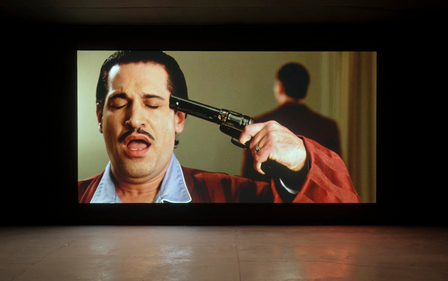



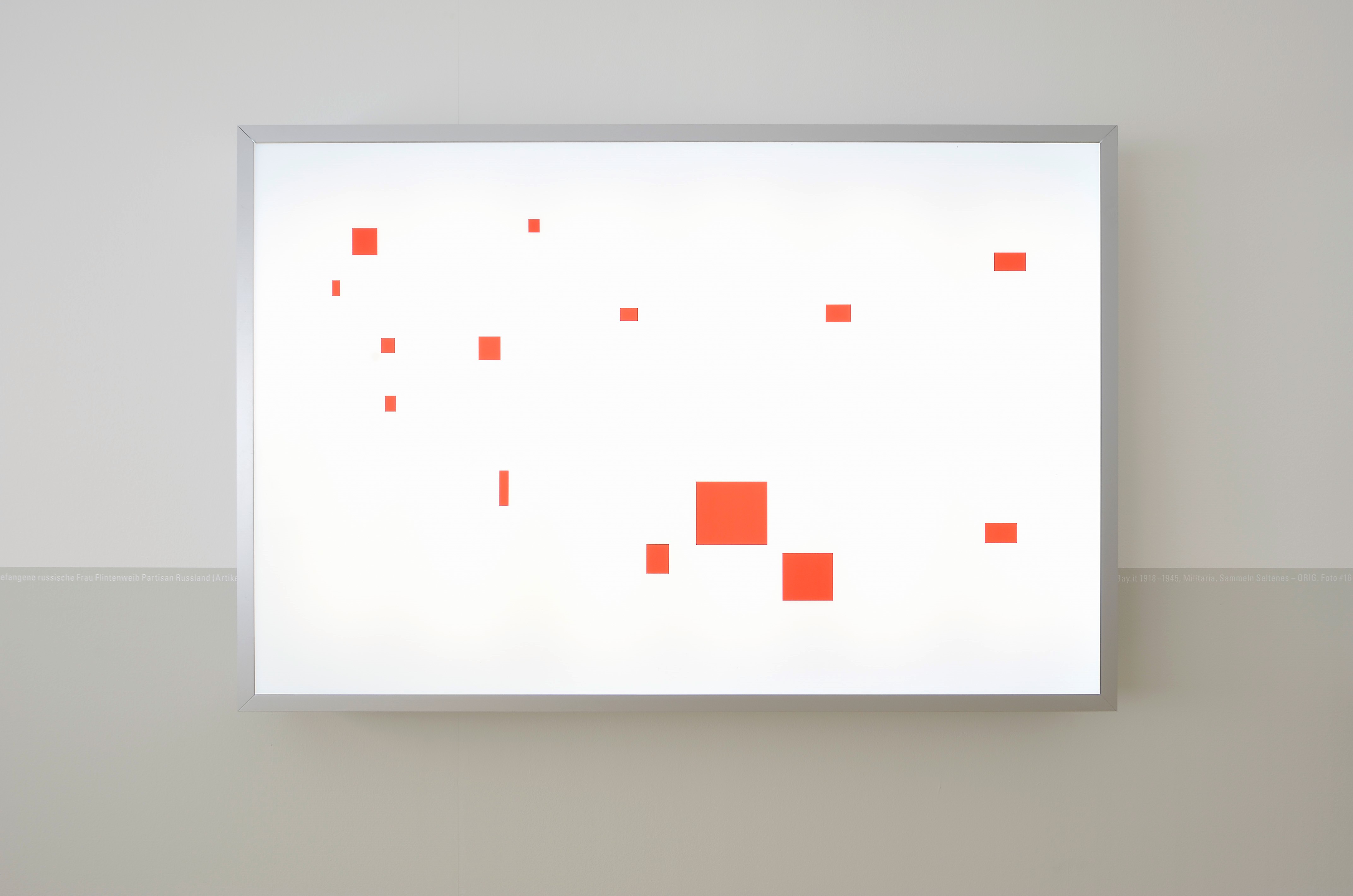
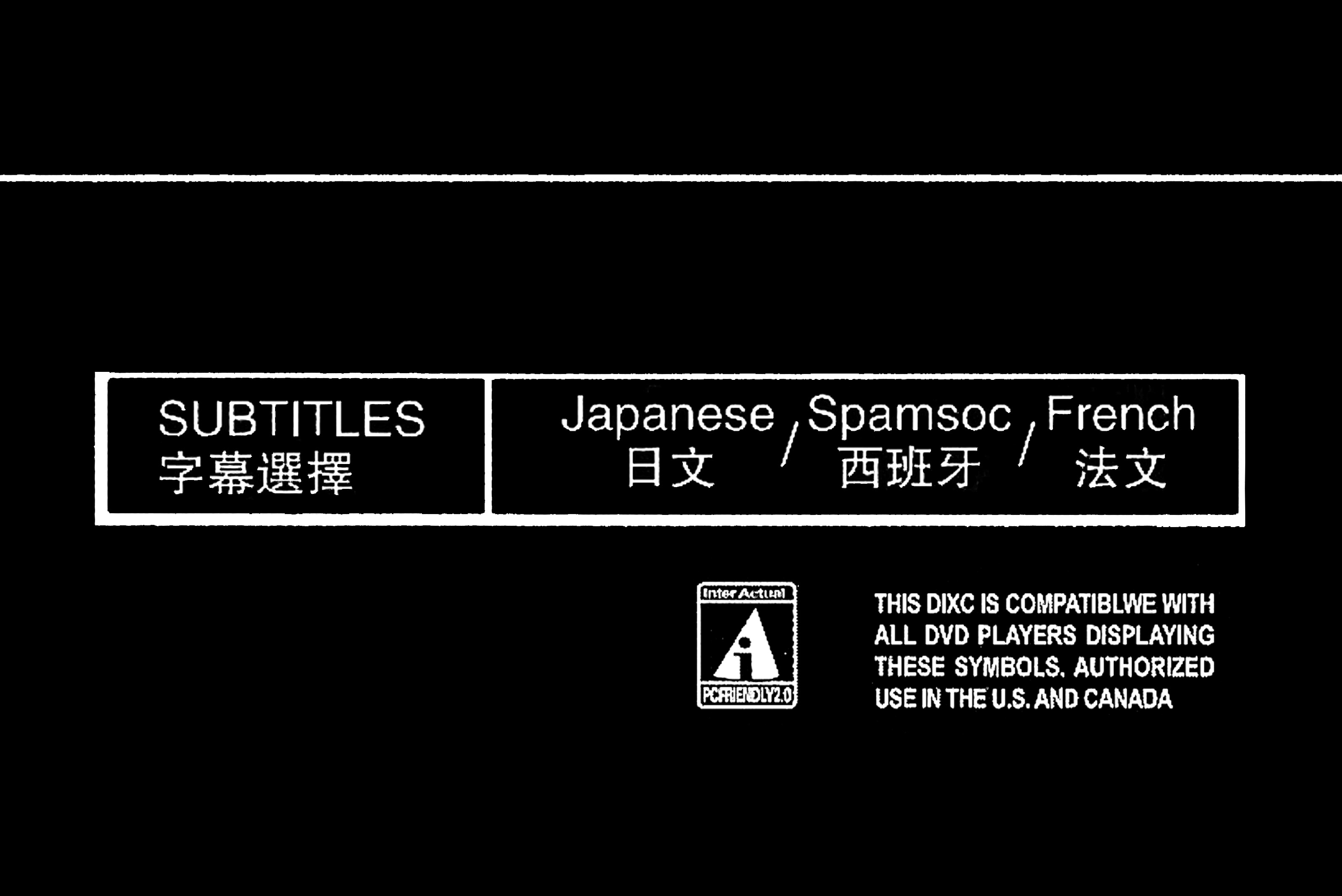
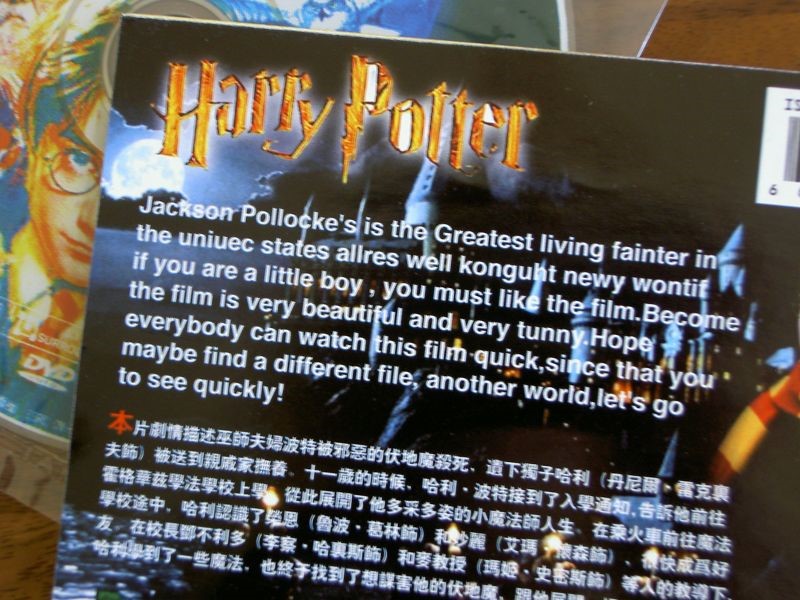
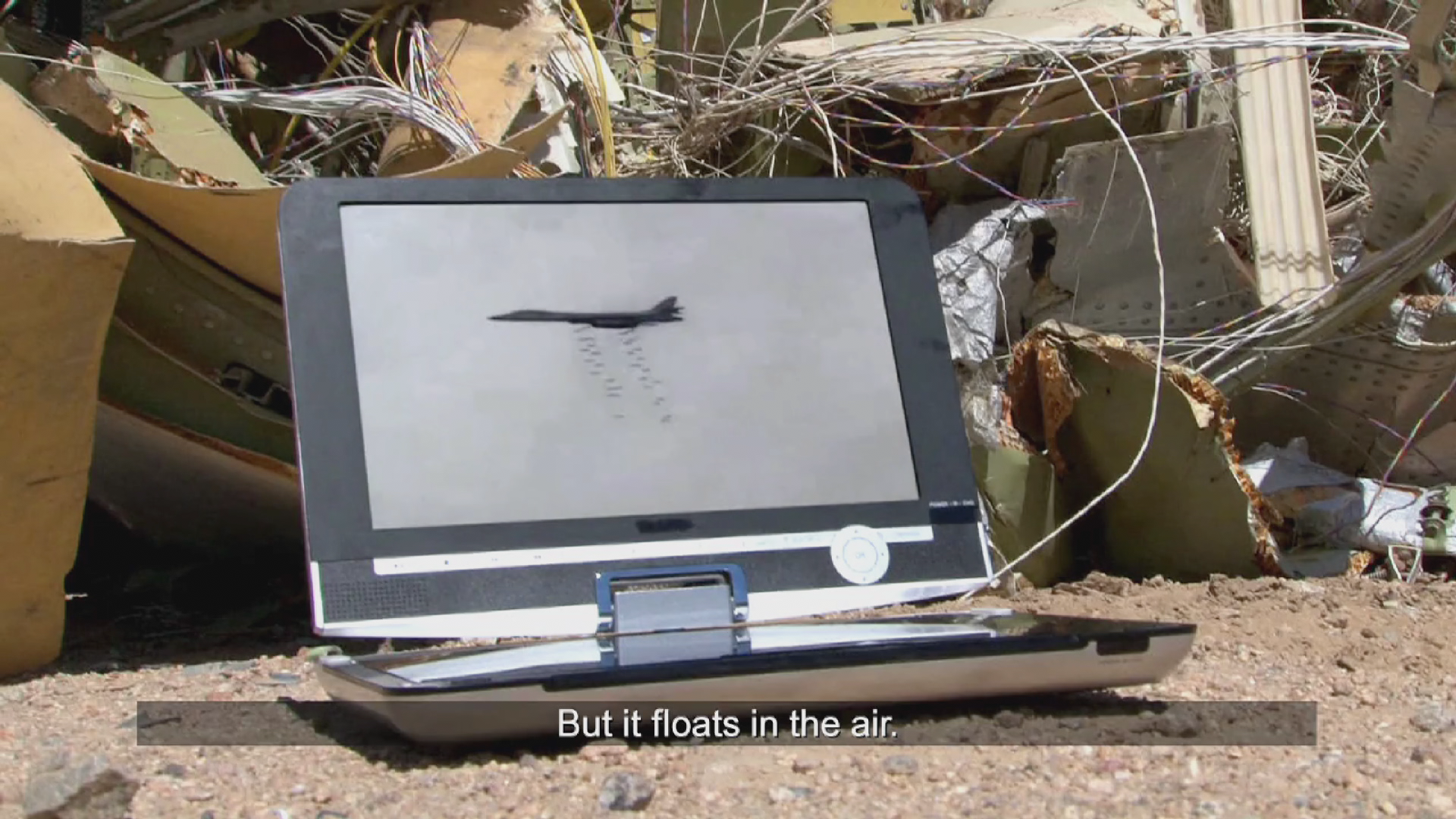

 Rosemary Heather